

🏭 Introduction: The View from the Factory Floor
I have stood on the factory floor at Progolas (part of the Apro Group) for over a decade. I have watched raw aluminum billets be extruded into heavy-duty profiles, and I have seen the precise moment a tension arm is calibrated to hold hundreds of pounds of force.
When you spend your life manufacturing outdoor shade structures, you realize that the terms people use loosely—like awning vs canopy—actually represent two completely different worlds of engineering.
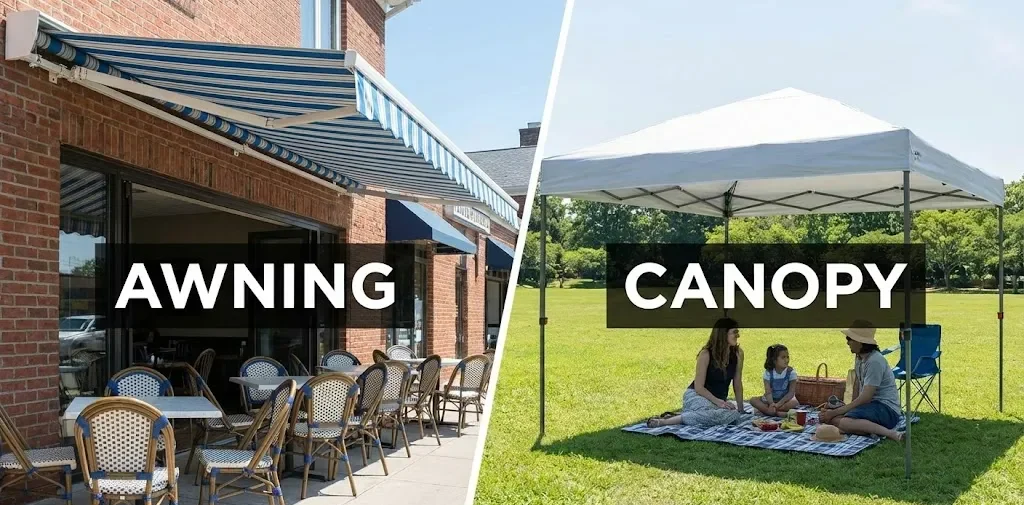
🤔 The Question We Hear Every Day
Every day, we receive inquiries from homeowners and contractors asking, “Do I need a canopy or awning?” or “What is the difference between awning and canopy?”
⚠️ Why The Distinction Matters
The confusion is understandable. Both provide shade. Both protect you from rain. Both can add significant value to a property.
But from a manufacturing and structural engineering perspective, they are distinct species. Choosing the wrong one can lead to structural failure during a storm, code violations, or simply a design that doesn’t function the way you need it to.
📘 Your Comprehensive Guide
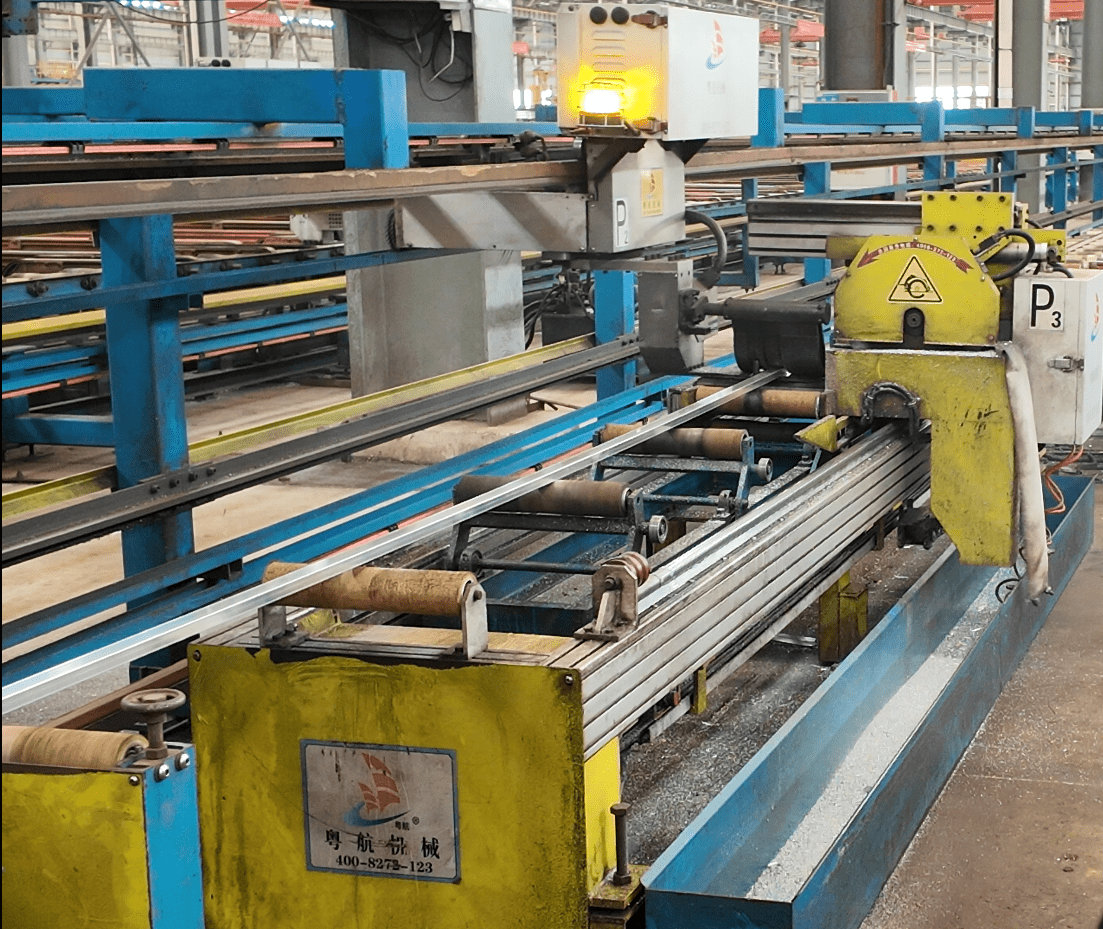
In this guide, I am going to take you behind the scenes. I will share insights from our production line, explain the rigorous international testing standards we adhere to, and walk you through real-world installation scenarios. Whether you are looking for a retractable awning vs canopy for your patio, or a commercial entry cover, by the end of this article, you will know exactly which structure fits your needs.
⛱️ What Is an Awning?
1. Definition: The Eyebrows of a Building
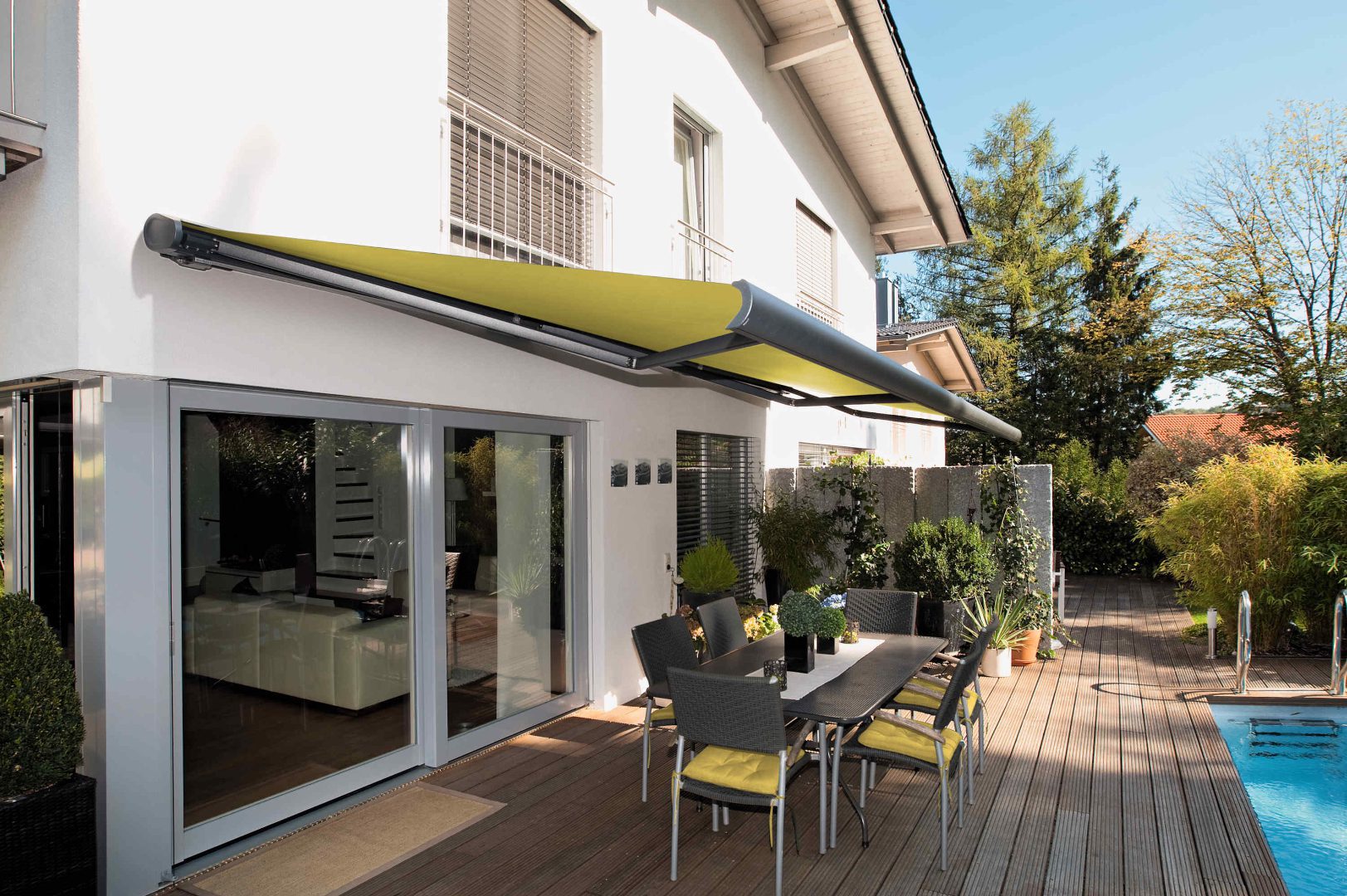
When we define an awning in the manufacturing sense, we are talking about a secondary covering attached to the exterior wall of a building. It acts as a projection.
The defining characteristic of an awning is that it is supported entirely by the building (and its own internal frame), without the need for vertical posts reaching the ground.
It is typically composed of a lightweight frame structure—usually aluminum or steel—over which a covering of canvas, acrylic, cotton, or vinyl is attached. In our factory, we design awnings to be the “eyebrows” of a building; they provide shade and protection for windows and doors without obstructing the ground path.
🏗️ Common Types
To understand the awning meaning fully, you must recognize the three manufacturing categories we produce:
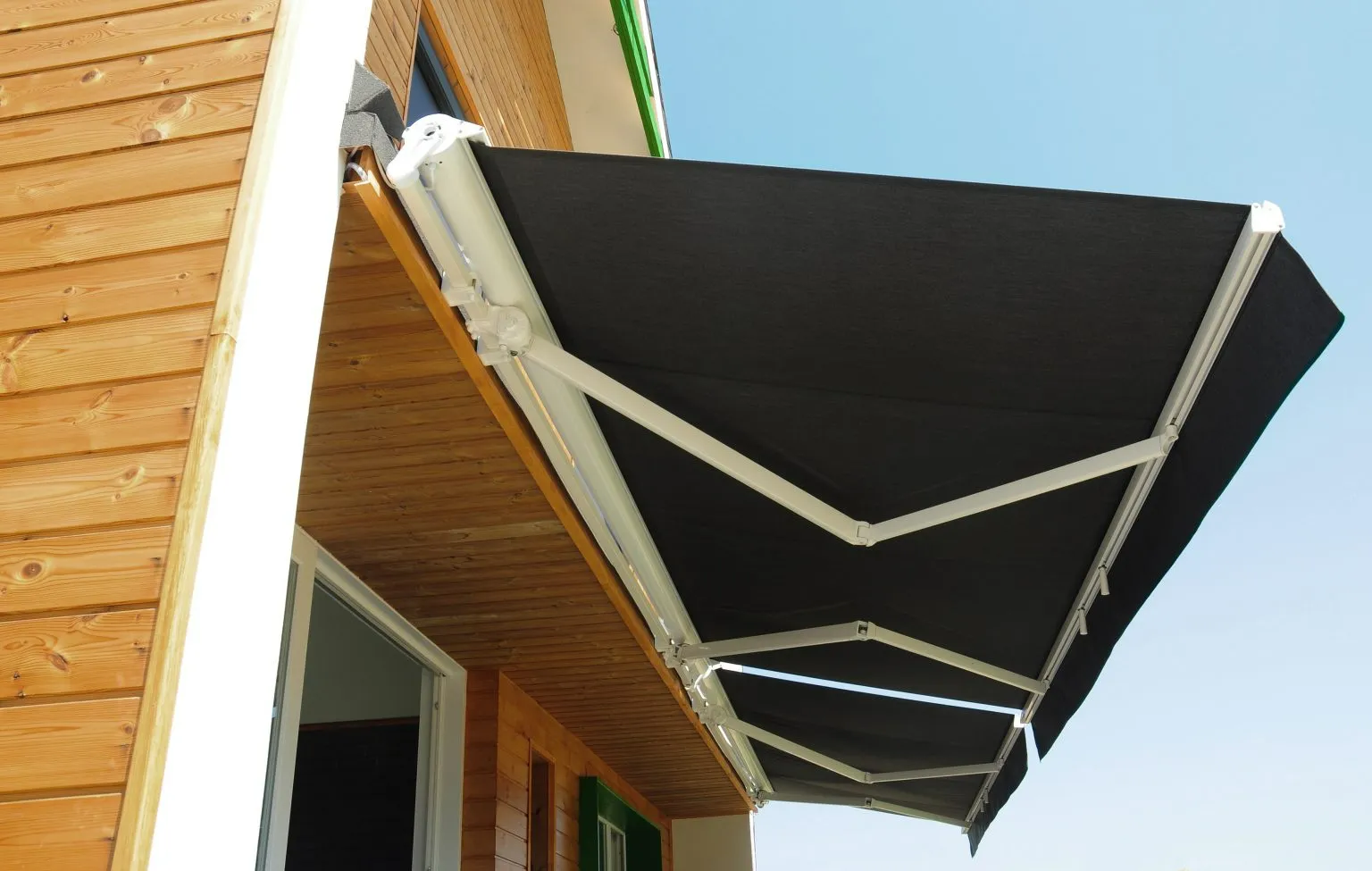
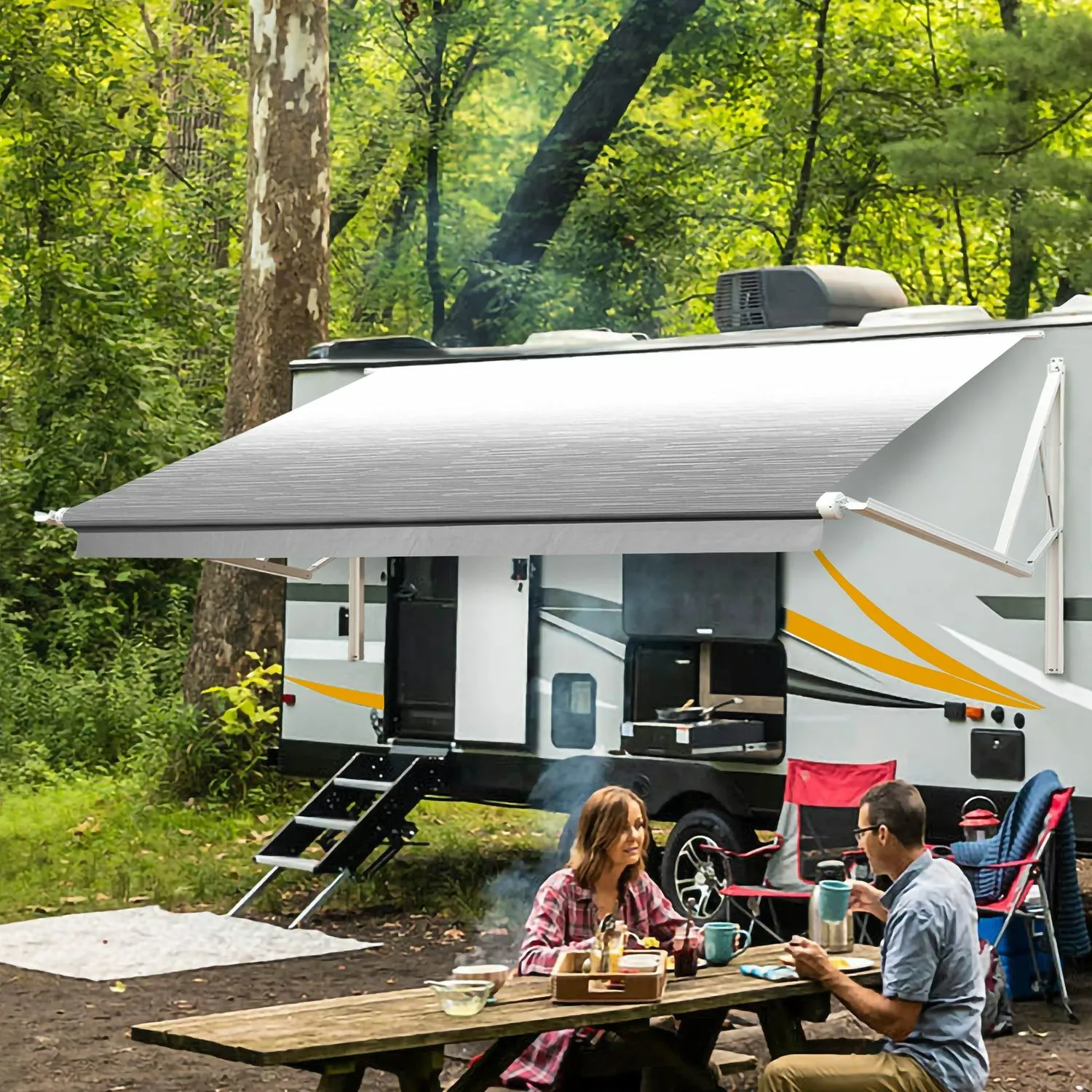
This is the most popular type for residential patios. These use spring-loaded lateral arms to push the fabric out. When not in use, the retractable awning rolls back against the wall.
The tension in these arms is critical. We use high-grade steel cables or chains inside the aluminum arms to ensure the fabric stays tight even when extended 10 feet out.
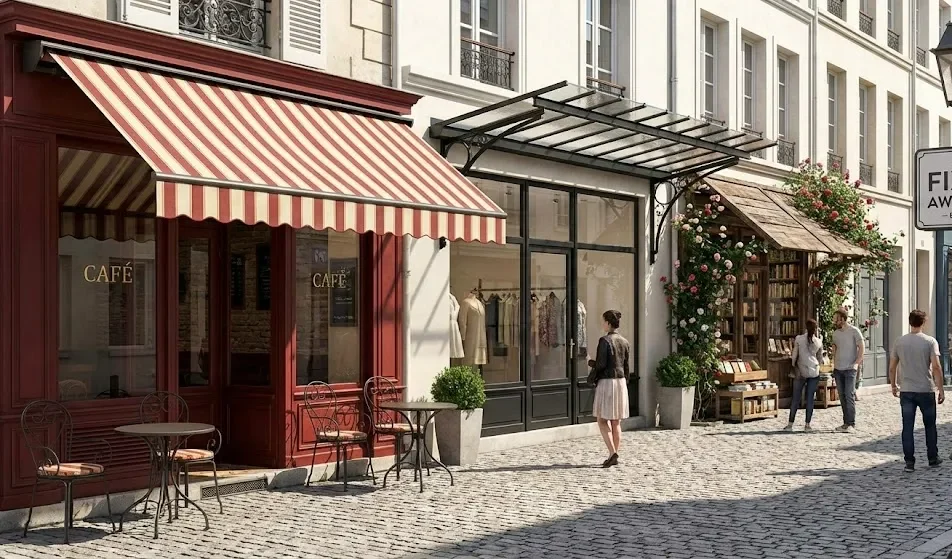
These consist of a welded metal frame permanently attached to the wall. They do not move. These are common on storefronts where branding is needed.
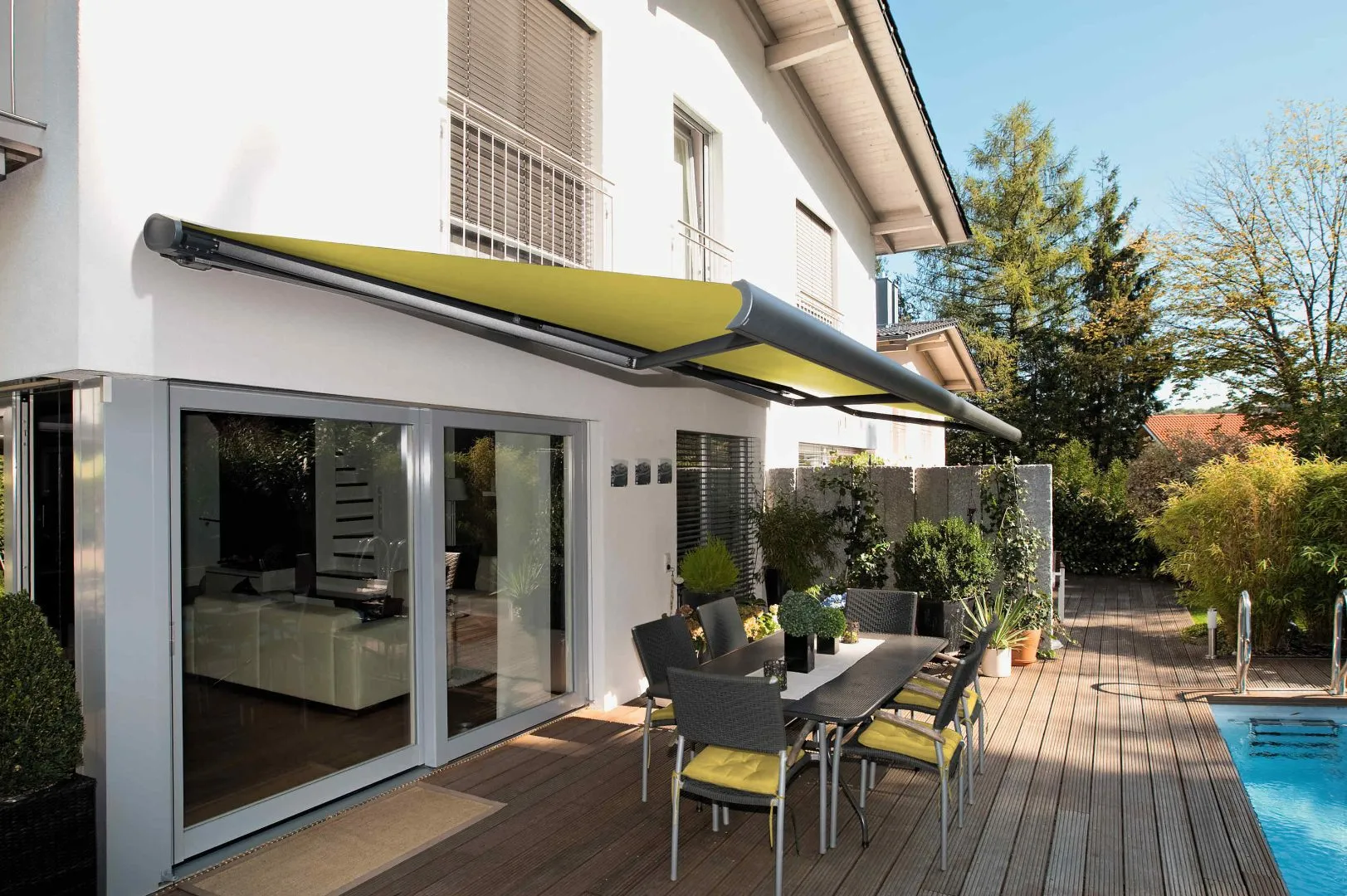
This is the premium version of a retractable awning. When the awning closes, it retracts fully into a protective aluminum housing (the cassette), protecting the fabric and arms from weather.
📍 Where It’s Used
Awnings are architectural supplements. You will find them:
- Above windows to reduce indoor glare and solar heat gain.
- Over decks and patios where homeowners want retractable sun control but don’t want posts obstructing their view.
- Above storefronts for signage and entry rain protection.
⛺ What Is a Canopy?
1. Definition: Structure Meets Ground

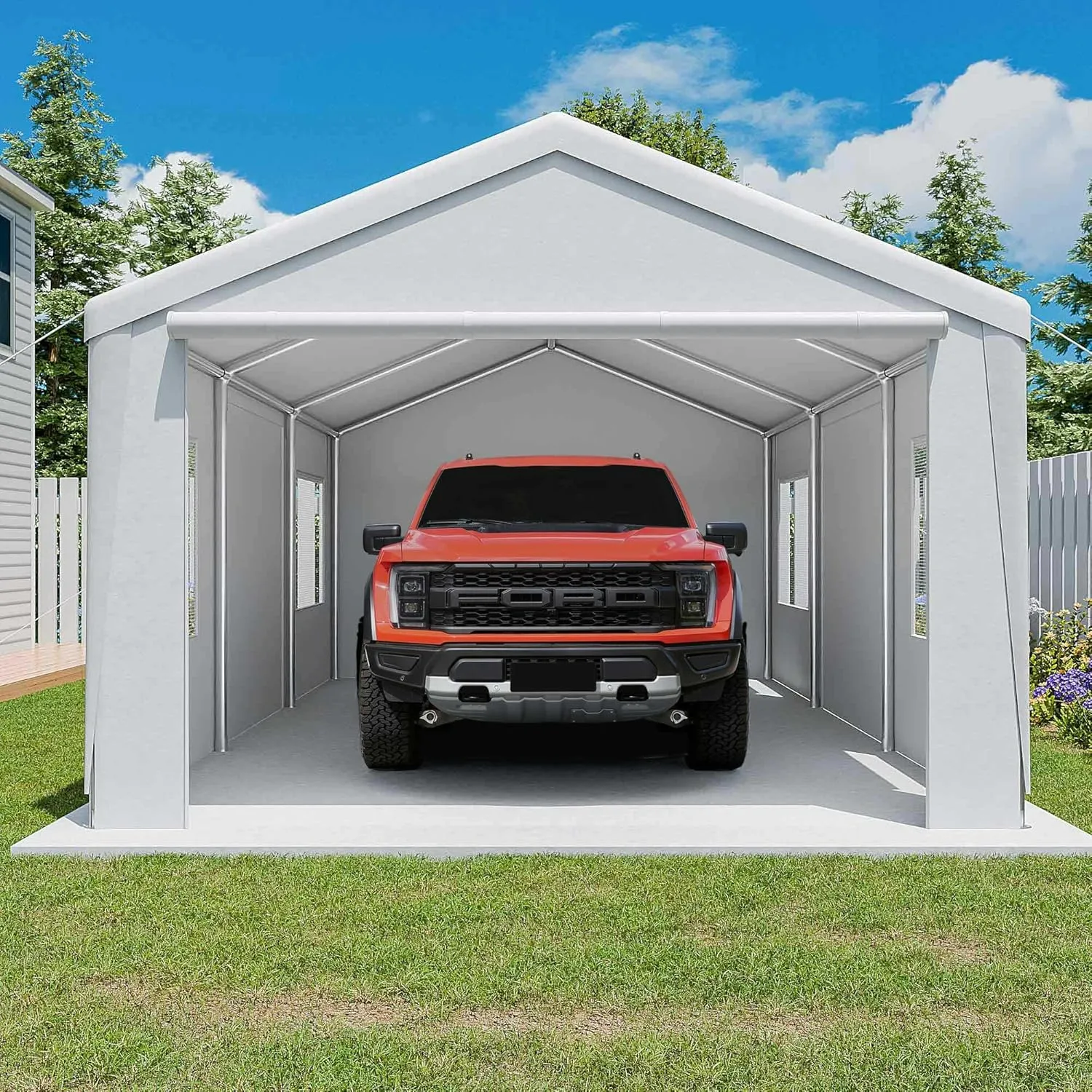
In contrast to an awning, a canopy is an overhead roof structure that has supports extending to the ground.
While it can be attached to a building on one side, its defining feature is the presence of vertical columns (posts) or a freestanding frame that bears the weight.
Because they transfer load to the ground rather than just the wall, canopies can cover significantly larger areas than awnings. A canopy outdoor structure can span 20, 30, or even 50 feet, which is physically impossible for a standard cantilevered awning.
🏗️ Common Types

These are the portable, white canopies or square canopy tents you see at farmers’ markets. They are lightweight, temporary, and use an accordion-style frame.
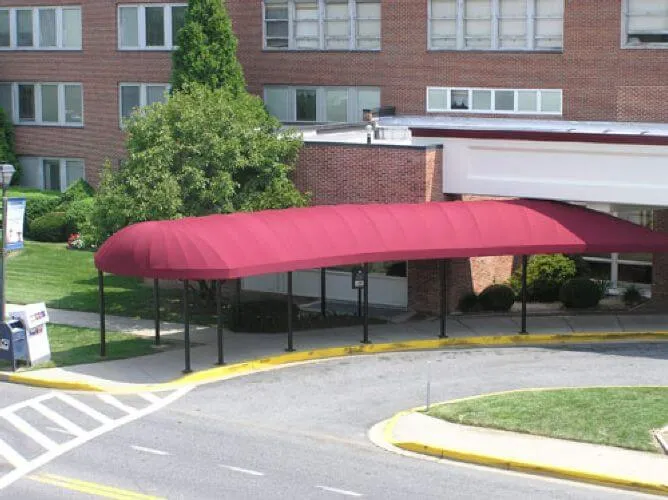
Often seen at hotels or restaurants, these are permanent structures extending from the door to the curb, supported by posts.
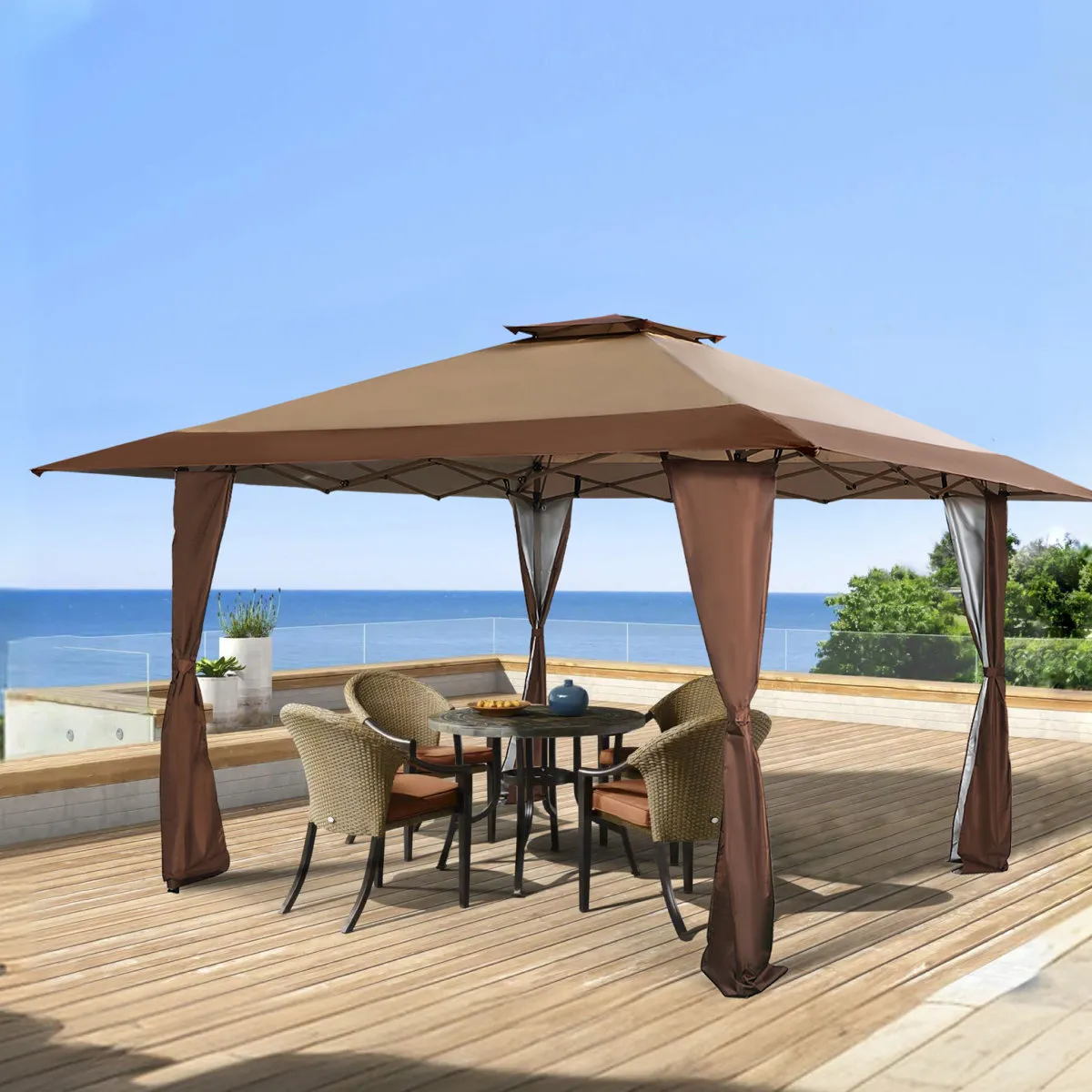
These are permanent garden structures that provide a canopy sun shade over a seating area or pool, completely detached from the house.
📍 Where It’s Used
- Outdoor events: Weddings, trade shows, and camping (canopy for camping).
- Walkways: Connecting two buildings or covering a long path.
- Large Patios: When the projection needed exceeds the limits of an awning.
- Poolside: Providing portable beach shade canopy or permanent shade areas away from the home.
⚖️ Awning vs Canopy: Quick Comparison Table
If you are looking for a fast way to distinguish awning vs canopy, this table breaks down the manufacturing and functional differences.
| Feature | Awning | Canopy |
|---|---|---|
| Attachment | 100% Attached to a building wall or roof eave. | Can be attached, but often freestanding or semi-attached. |
| Support | Cantilevered (Internal arms/frame). No ground posts. | Supported by vertical posts/columns or a full frame. |
| Mobility | Retractable (Not movable). | Usually fixed (permanent) or portable (pop-up). |
| Weather Resistance | Moderate. Retractable units must be closed in high wind. | High (Permanent) to Low (Pop-up). Permanent canopies handle heavy loads. |
| Typical Uses | Window/door at the eaves, Camping vehicles & RVs. | Large events, walkways, pools, large commercial areas. |
| Materials | Acrylic/Vinyl fabric on Aluminum arms. | Steel/Aluminum frame with Vinyl, Metal, or Fabric roof. |
| Installation Complexity | High (Requires structural wall mounting). | Medium to High (Requires ground footings or weights). |
| Permits & Codes | Moderate (Facade changes). | High (Zoning, setbacks, and ground coverage). |
| Cost Range | $ – $$$(Manual to High-end Motorized). | $ –$$$$ (Cheap pop-up to Engineered Steel). |
| Best For | Flexible shade without obstructing views. | Maximum coverage and permanent rain protection. |
🖐️ 5 Key Differences Between Awning and Canopy
To truly understand the difference between awning and canopy, we need to look beyond the definition and into the engineering. Here are the five critical distinctions.
1. Attachment & Support: Attached vs Freestanding
This is the “Golden Rule” of distinction.
- 🏠 Awning: Relies on the structural integrity of your home’s wall. During installation, we must locate the house studs or headers. An awning hangs off the house.
- 🌳 Canopy: Relies on the ground. A freestanding canopy or portable beach shade canopy stands on its own legs. Even if a canopy is “attached” to a wall on one side, if it has legs on the other side, it is technically a canopy structure, not an awning.
2. Structural Stability & Wind
Which is better in wind awning or canopy? This depends heavily on whether the canopy is temporary or permanent.
Because they have legs anchored into concrete, permanent canopies are structurally superior for wind load.
These are giant sails. In our factory testing, we subject awning arms to stress tests, but even the strongest arm cannot defy physics. If wind catches the fabric from below, the uplift force can rip the awning off the wall.
These are the weakest. A lightweight canopy for beach use is not designed for storms.
According to ASCE 7 (Minimum Design Loads for Buildings and Other Structures), a standard widely used in structural engineering, membrane structures (like canopies) must calculate wind uplift based on the openness of the structure. A permanent canopy anchored to a foundation can be engineered to withstand 100+ mph winds, whereas a retractable awning (Class 2 under EN 13561 standards) is generally rated only for winds up to 20-25 mph.
3. Coverage Area & Shape Flexibility
Because it uses posts, a canopy can cover an unlimited area. You can link multiple square canopy modules together to cover an entire football field. This makes awning vs canopy for restaurant outdoor seating a clear choice for large venues—canopies win on size.
The projection (how far it sticks out) is limited by the strength of the cantilever arms. Typically, a retractable awning maxes out at a 13-14 foot projection. If your patio is 20 feet deep, an awning cannot cover it all.
4. Installation, Permits & Building Codes
This is where the headache often starts for buyers.
- Awning: Installation involves drilling into the facade. Awning permit requirements usually relate to how far it projects over a public sidewalk (commercial) or HOA aesthetics (residential).
- Canopy: Because it touches the ground, a permanent canopy often triggers Lot Coverage zoning rules. You are essentially adding a new “building footprint.” Do you need a permit for a canopy? For permanent ones, almost always.
A commercial awning vs canopy code compliance check is vital. Fire codes often require fire-retardant fabrics for both.
5. Cost Drivers & Maintenance
- Awning Cost: The driver here is the motor. A motorized awning vs canopy comparison shows that awnings have more moving parts (motors, sensors, arms), which can increase the price.
- Canopy Cost: The driver is the structural steel and footing work. Digging concrete footings for a permanent canopy is labor-intensive.
Awning vs canopy maintenance differs. Awnings need arm lubrication. Canopies need frame inspection for rust at the base.
🎯 Which One Should You Choose? Best Use Cases
📖 Top 3 Confusing Terms Clarified
To stop you from searching for another word for awning and getting the wrong product, let’s clear up the terminology.
1. Awning vs Patio Cover
A patio cover is usually a solid roof structure (aluminum or wood) attached to the house. It is a specific type of permanent canopy.
An Awning usually has a fabric roof, while a Patio Cover has a solid roof.
2. Canopy vs Pergola
A pergola is an open-frame structure (usually with slats or louvers). A canopy implies a full cover (fabric or solid).
3. Canopy vs Gazebo
A gazebo is a specific shape (usually octagonal or hexagonal) with a raised floor and a turret-style roof. A canopy is a broader term for any supported overhead cover.
🏭 Factory Experience: The Importance of “Arm Tension”
I remember a specific order on our production line for a client in a high-wind coastal town. They ordered a 20-foot wide retractable awning with a massive 13-foot projection.
⚙️ In the Factory: The Calibration Challenge
Assembling this required specialized calibration. The “elbows” of a retractable awning contain high-tension springs.
- Too Low: The fabric sags and collects water (a disaster).
- Too High: The customer can’t crank it open.
🌬️ The Simulation
We had to upgrade this specific unit to “Class 3” wind resistance arms using double-sheathed steel cables.
We simulated 30 mph wind bursts in our test bay. The arms held, but the wall brackets showed stress.
🛠️ The Solution: Custom Engineering
We advised the client that standard siding mounting wouldn’t work. We fabricated custom “header plates” to spread the torque load across three wall studs instead of one.
This is the difference between buying a box from a shelf and working with a manufacturer—We can customize it at any time according to the customer’s needs, and we have the ability to modify it according to the scenario.
✅ How to Quickly Decide: The “Yes/No” Checklist
Use this checklist to settle the awning or canopy debate in 60 seconds.
🏁 Conclusion: The Final Verdict
The battle of awning vs canopy comes down to connection and purpose.
🏠 An Awning
Connects to your home to extend your living space seamlessly.
🌳 A Canopy
Stands its ground to create a new, protected zone.
🧭 Your Path Forward
- For Flexibility & Style:
Explore our Awning Product Page for deck solutions. - For Robust Scale:
If you need large-scale coverage, a canopy or a pergola might be your better path.
Regardless of your choice, ensure you are prioritizing materials—acrylic awning vs polyester canopy fabrics make a huge difference in lifespan.
Ready to find the perfect shade?
Contact Us at Progolas today for a factory-direct consultation.