
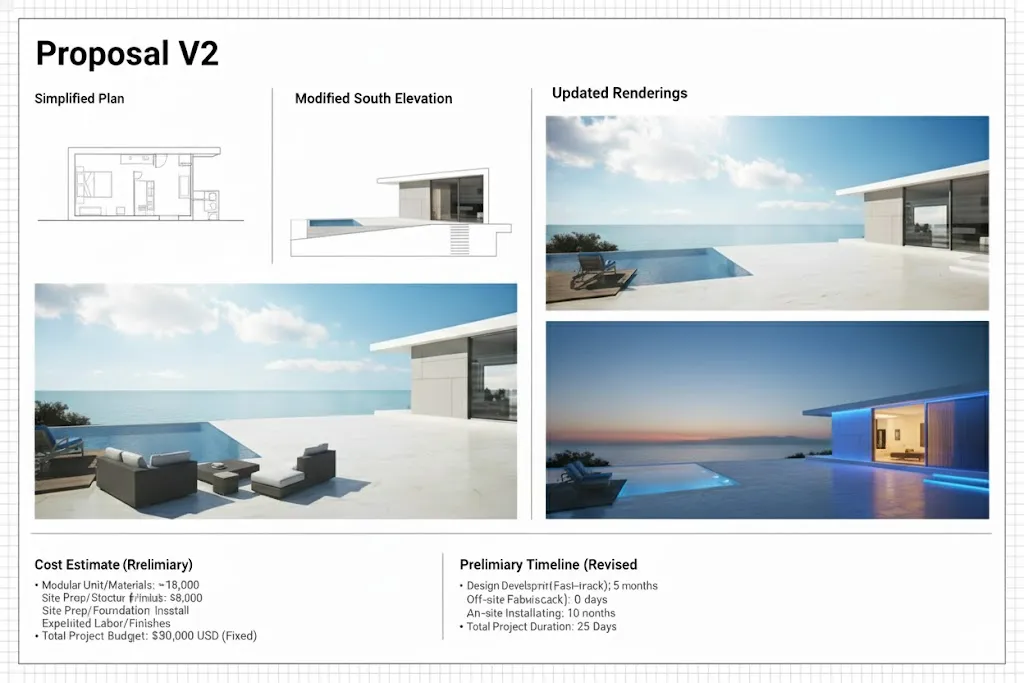
1,Requirement Confirmation & Project Initiation (T+0 to T+2 days)
- What we do: Conduct phone/video calls to discuss layout, dimensions, wind zones, color schemes, budget, and timeline; confirm coastal proximity (0–3km/3–10km zones).
- Client Provides: Site plan/elevation sketches or existing drawings, target dimensions/ceiling height, ground surface type (concrete/paving/wood deck), power source location, HOA/municipal permit requirements (if applicable).
- Deliverables: Proposal V1 (plan/elevation/rendering + cost estimate + preliminary schedule) and Site Survey Checklist.
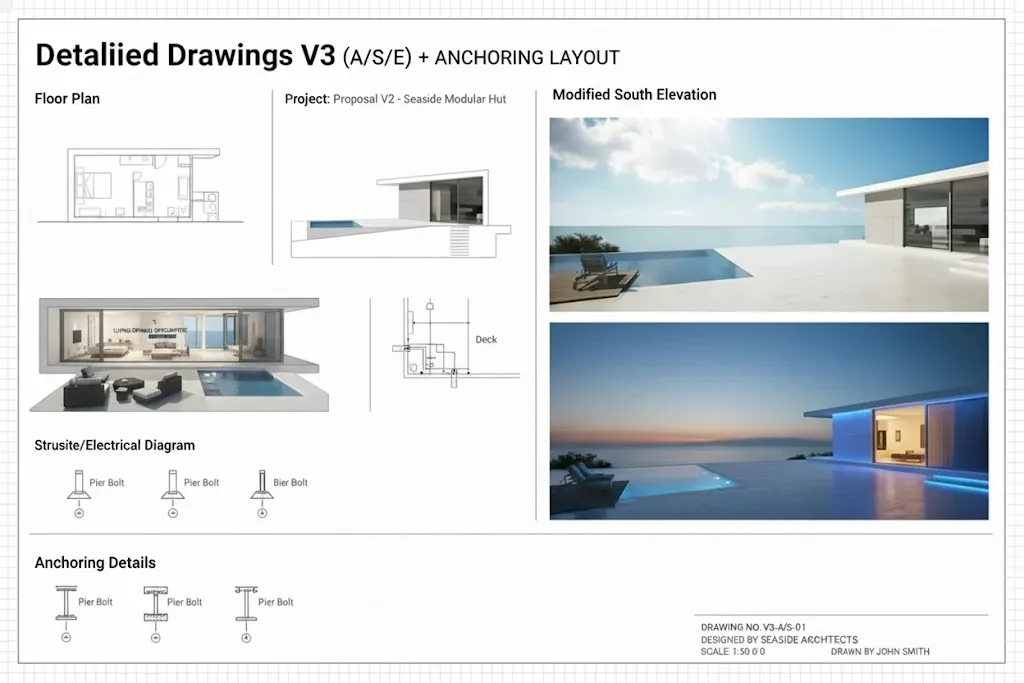
2,Site Survey & Design Refinement (T+3 to T+6 days)
- On-site visit: Laser distance measurement + horizontal elevation, foundation rebound, drainage flow, obstacles, wind corridor; capture 360° reference imagery.
- Engineering actions: Preliminary wind load calculation (per ASCE7/local code), foundation method recommendations (individual footings/strip footings/chemical anchors), integrated drainage routing.
- Material Finalization:
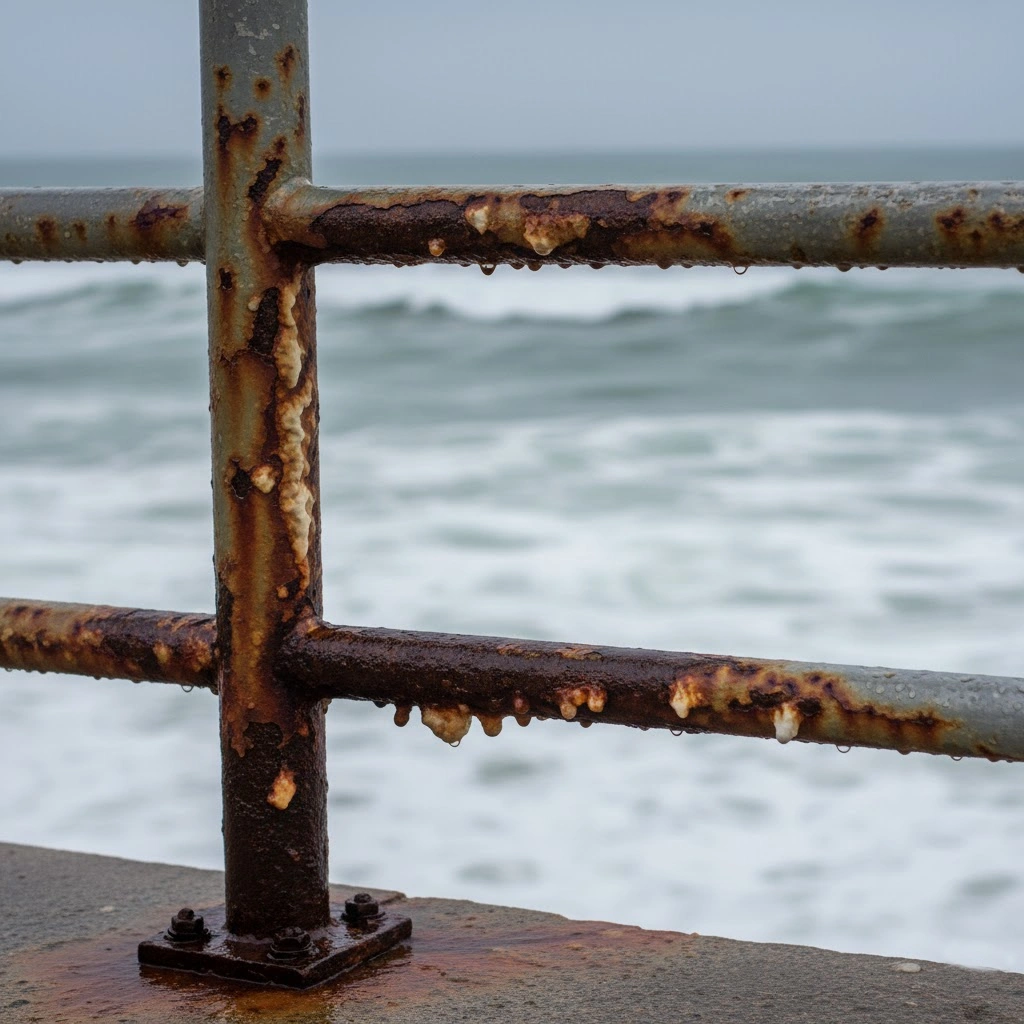
Coastal zones 0–3km: Default AAMA 2605 coating + 316 fasteners; >3km may use 2604.
Color swatches and tactile samples confirmed in batch. - Deliverables:
Survey Report, Detailed Drawings V2 (A/S/E) + Anchor Layout,
Wind Load & Construction Notes Summary, Storm Mode Operation Diagram.
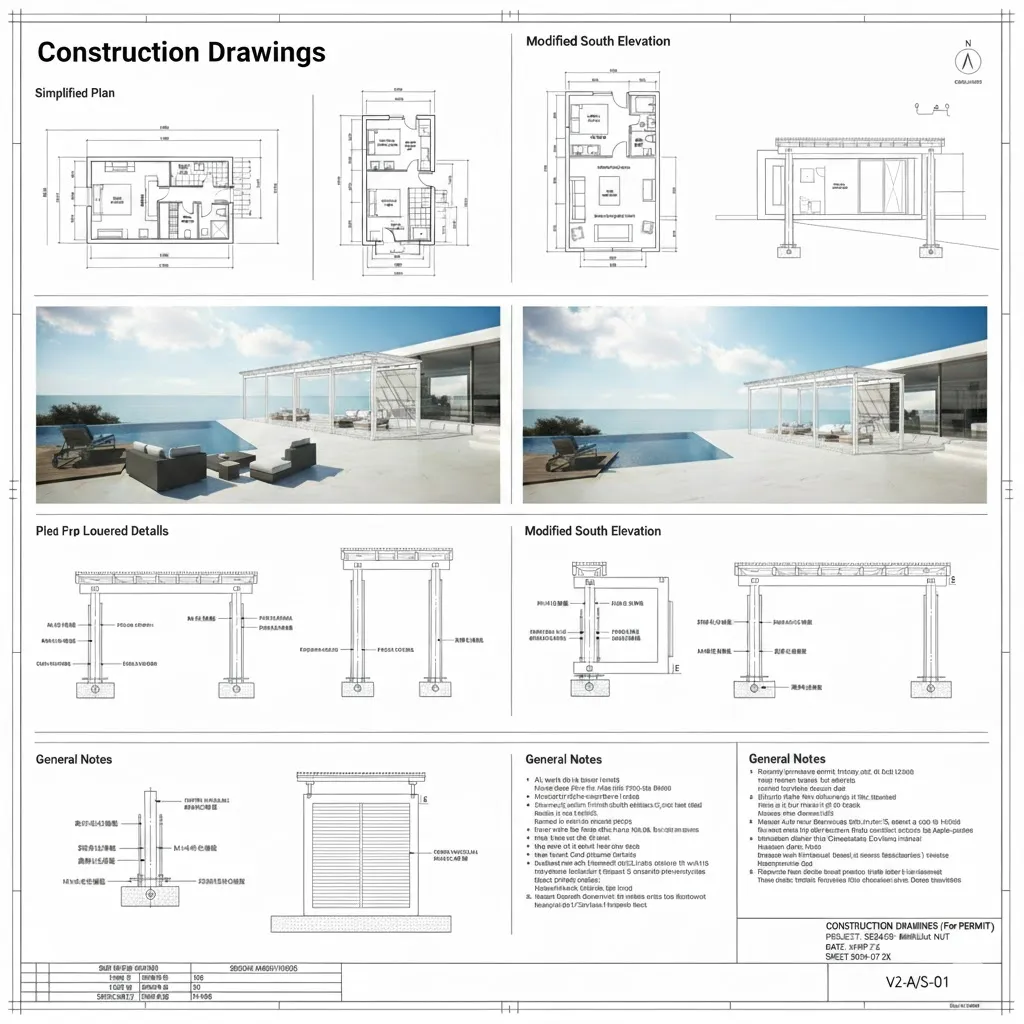
3,Technical Review & Permitting (may run concurrently with Step 3)
- Structural Sign-off (if required): I liaise with registered structural engineer to produce foundation/anchor bolt calculations, load diagrams, and schedules.
- Government/Park Submissions: I compile submission package (material data sheets, coating standards, sample cards, installation manual, construction safety plan).
- Deliverables: Construction Drawings (For Permit), Material Data Sheets, Method Manual + JHA.
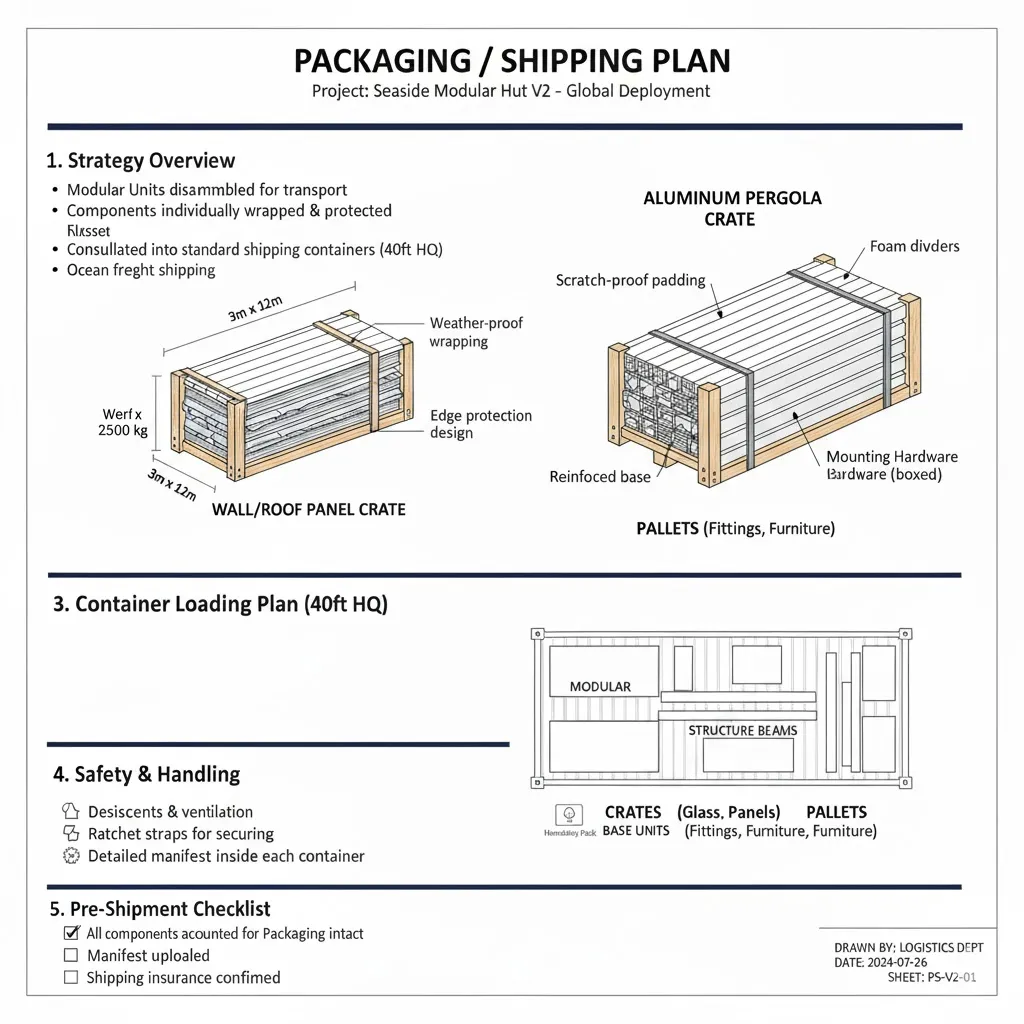
4,Contract & Order Placement & Master Schedule Freeze (T+7 to T8 days)
- I lead Kickoff: Freeze dimensions/BOM/colors; confirm power/drainage interfaces and foundation completion timeline; lock logistics routes and lifting points.
- Production scheduling: Raw material intake → Pre-treatment → Chromium-free passivation → Spraying/Anodizing → Curing → Final inspection; concurrently prepare stainless steel components, insulating plates, and seals.
- Deliverables: Production Gantt Chart, Bill of Materials (BOM), Packaging/Shipping Plan, Warranty Terms.
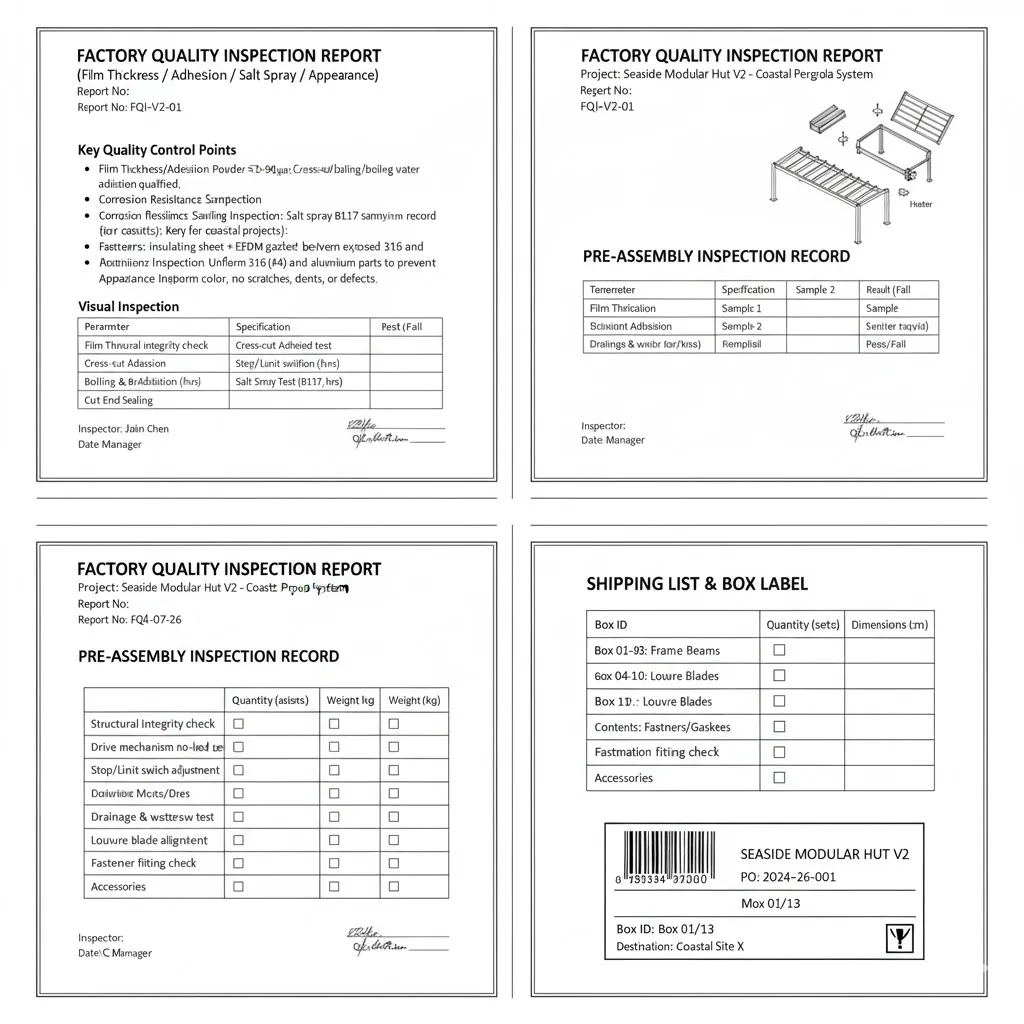
5,Manufacturing & Quality Control (T+8 to 10 days after step 3, varying depending on scale)
Key Quality Control Points:
- Film Thickness/Adhesion: Powder ≥70–90μm; Cross-cut adhesion/boiling water adhesion qualified.
- Corrosion Resistance Sampling Inspection: Salt spray B117 sampling inspection record (key for coastal projects); paint sealing at cut ends.
- Fasteners: Insulating sheet + EPDM gasket between exposed 316 (A4) and aluminum parts to prevent galvanic corrosion.
- Pre-assembly and Trial Run: No-load test run of drive mechanism, stop/limit adjustment, drainage and water flow test.
- Output: Factory Quality Inspection Report (including film thickness/adhesion/salt spray/appearance), Pre-assembly Inspection Record, Shipping List & Box Label.
6. Logistics & On-site Handover (T-3 to T-1 days before loading)
- Packaging: Vacuum-sealed moisture-proof bags + desiccant + wooden crates; corner protectors added to critical surfaces.
- On-site Handover: I and the on-site supervisor will check and receive goods according to the packing list/pallet number, take photos for archiving; consumables and spare parts will be separately labeled.
- Output: “Arrival Inspection Form (with photos)”, “Packing List”, “Damage/Missing Material RFI Process”.
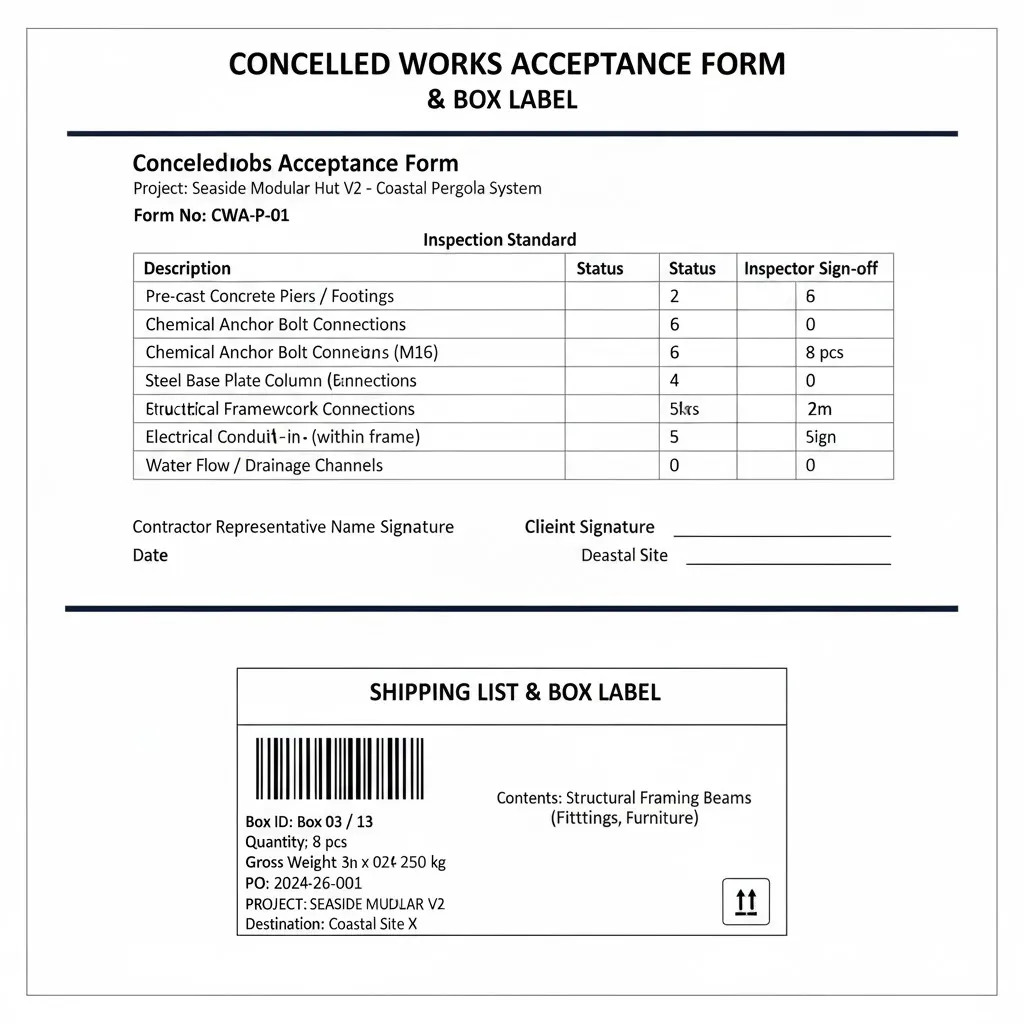
7. Foundation and Pre-embedded Works (Can be done by civil engineering first)
- Foundation Construction: Prioritize penetrating the brickwork to the concrete; independent foundations should be constructed according to the dimensions/reinforcement/concrete grade shown in the drawings; chemical anchors M12–M16 (316) will be accepted based on curing time and pull-out value.
- Concealed Works Acceptance: Foundation pit inspection, reinforcement and anchor positioning, pull-out test records.
- Output: “Concealed Works Acceptance Form”, “Anchor Bolt Pull-out Record”.
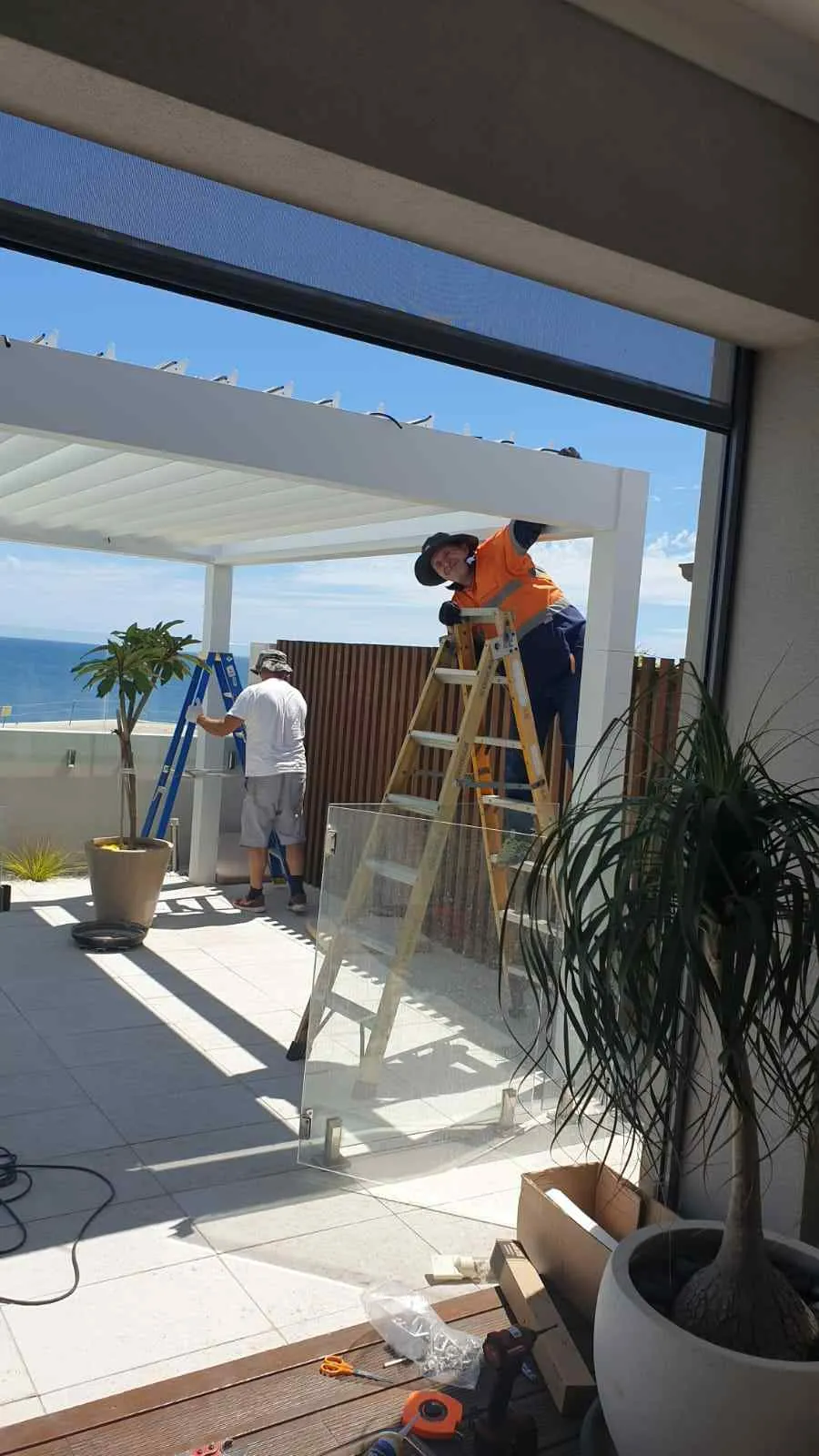
8. Installation (Standard single unit: 3-5 days; Multi-unit/irregular shapes: adjusted according to scale)
Daily Plan
- Day 1: Laying out lines → Column/anchor fixing → Beam positioning.
- Day 2: Louvers/linkage mechanism → Motor → Drainage/cable routing.
- Day 3: System debugging → Storm Mode mechanical locking → Edge finishing/drip finishing.
Key Controls:
- Torque: Verify each item according to the Torque Table and mark with a pen.
- Drainage: Gutter cleaning → Water flow test (sprinkler/water pipe, confirm water outlet from column).
- Electrical and Control: Limit switches/obstruction protection/rain control linkage (if installed).
- Noise reduction and anti-loosening: EPDM vibration isolation, silicone cushioning, adhesive.
- Output: Water flow/trial operation record.
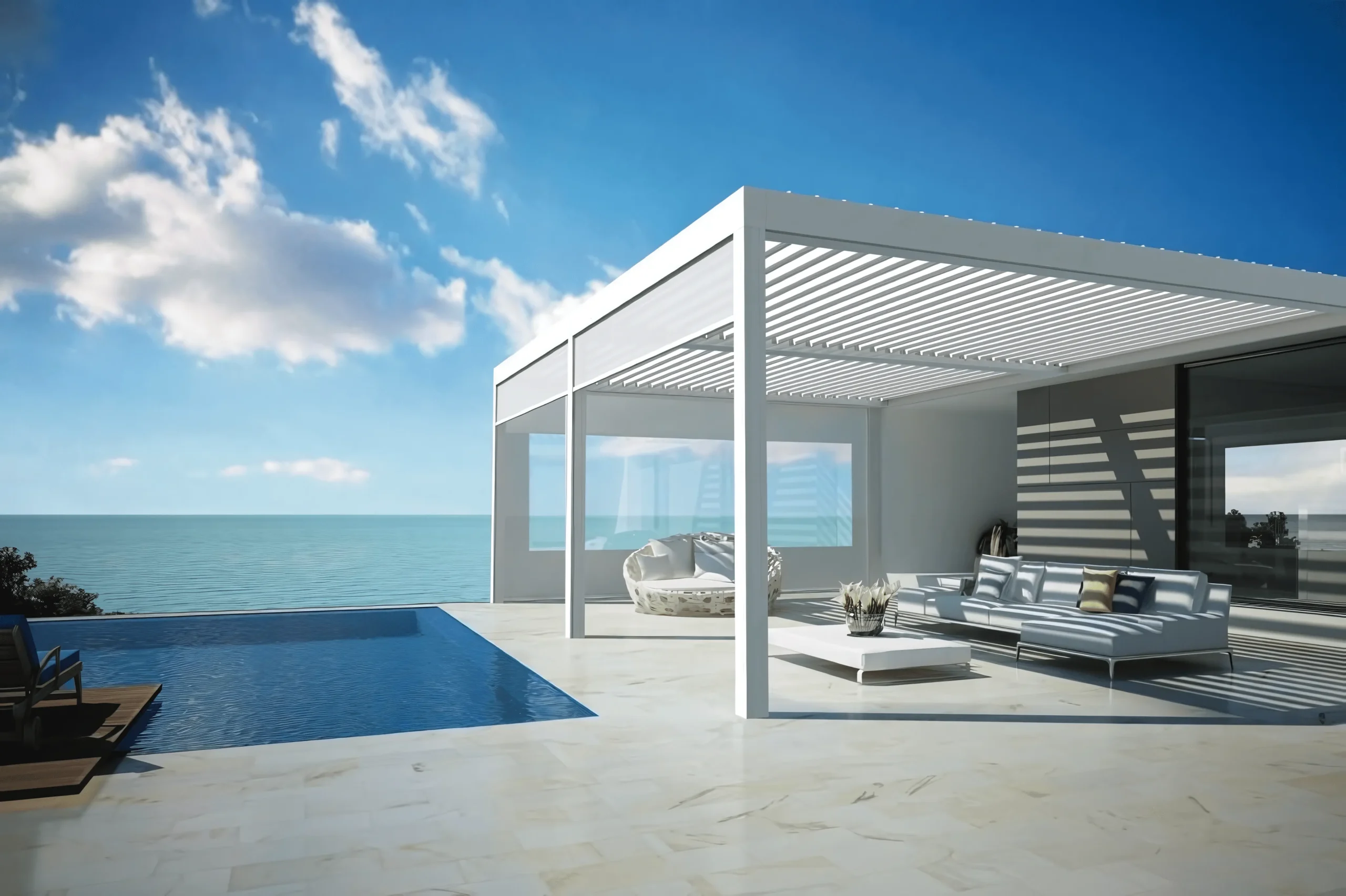
9. Joint Commissioning & Delivery Acceptance (1 day)
- I will guide you through the inspection item by item:
- Appearance: Coating, edge finishing, seam alignment, scratch/dent repair;
- Structure: Anchor quantity/specification/torque;
- Function: Opening/closing/stopping/obstruction detection/leakage points;
- Storm Mode: Blade 90°, mechanical locking in place。