

🏡 Deciding: Pergola vs Patio Cover
Deciding between a pergola vs patio cover is one of the first and most critical steps in designing your outdoor living space. While the terms are often used interchangeably in casual conversation, the difference between pergola and patio cover structures is significant—affecting everything from rain protection and airflow to resale value and permitting.
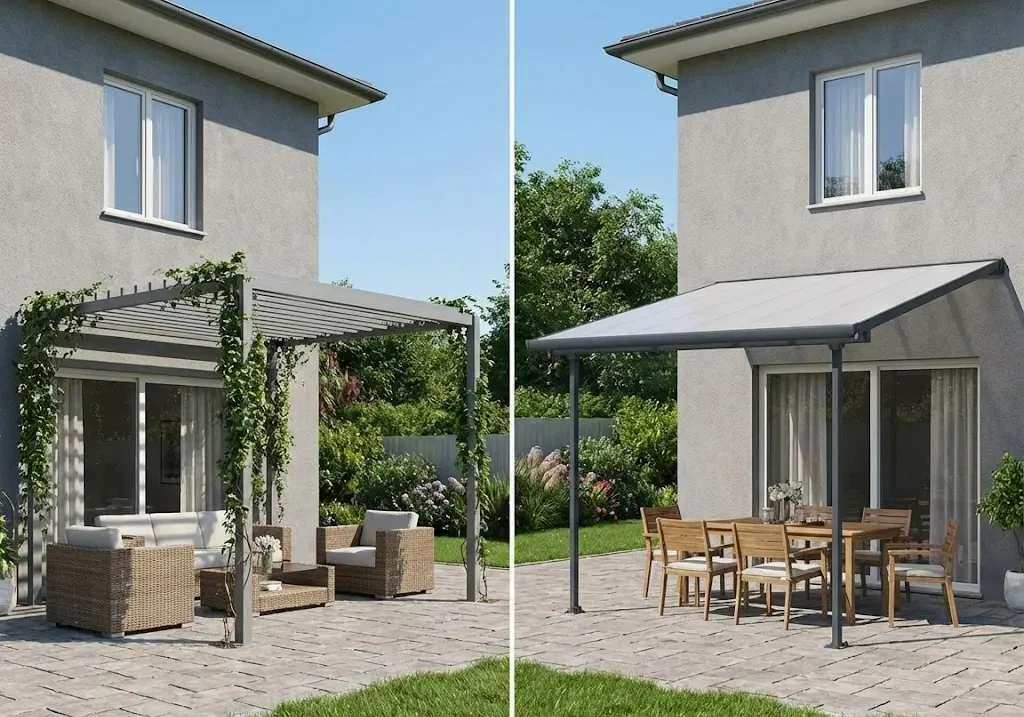
☂️ Patio Cover
Typically defined as a structure with a solid roof that offers 100% protection from the elements but blocks sunlight.
☀️ Pergola
Historically, an open structure with a slatted roof that filters light but allows air to circulate.
🔄 The Line is Blurring
With the rise of modern louvered systems, you no longer have to choose between the pros and cons of a solid roof versus an open lattice.
In this guide, we will break down the structural differences, cost drivers, and performance factors to help you decide whether a covered patio vs pergola is right for your home.
🏛️ What is a Pergola?
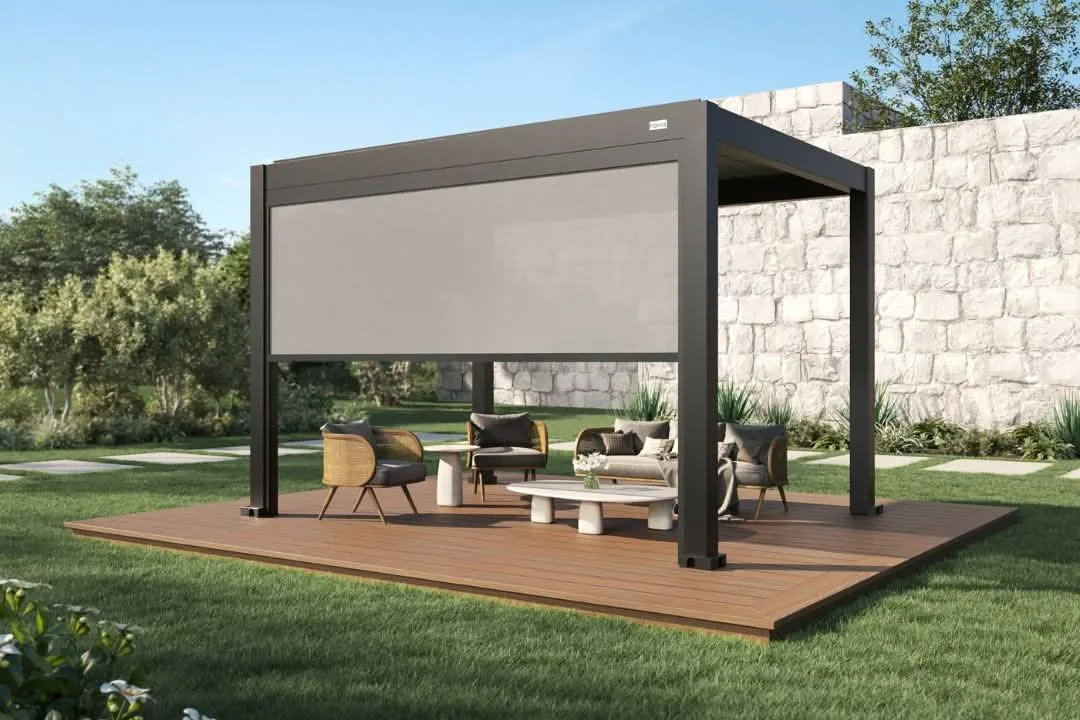
📖 Quick Definition
A pergola is an outdoor frame structure consisting of vertical posts and overhead beams that supports a roof of open rafters, slats, or adjustable louvers. It is designed to define an outdoor space and provide partial shade and airflow while maintaining an open-air connection to the sky.
a Adjustable pergola roof is designed to manage sunlight rather than block it entirely. This makes it the superior choice for pergola shade vs airflow explained simply: hot air rises and escapes through the open roof, keeping the space underneath cooler.
🏗️ Is a Pergola Considered a Structure?
Yes. Even though it may look open, most municipalities classify a pergola as a permanent structure, especially if it requires concrete footings.
📊 Table: Common Pergola Roof Systems
| Roof Type | Shade Control | Rain Protection | Airflow | Best For |
|---|---|---|---|---|
| Fixed Slats | Fixed (40-60%) | Low (Drips through) | High | Dry climates, decorative use |
| Adjustable Louvers | 0% to 100% (Adjustable) | High (Water-resistant when closed) | Controllable | All-weather use, rain & sun |
| Retractable Canopy | Full or None | Medium (Fabric dependent) | High (When open) | Flexible shading, softer look |
What types of pergolas are most common?
The three main types of pergolas (louvered, slatted, retractable canopy) dominate the market today.
The traditional choice. It uses fixed rafters to cast shade bars. While beautiful, it offers no protection when it rains.
This features a fabric shade that slides on tracks. Retractable canopy pergola pros and cons include excellent flexibility (you can see the stars at night) but higher maintenance, as fabric can fade or tear over time.
The modern standard. When comparing a louvered pergola vs slatted pergola, the louvered system wins on functionality. It features rotating blades that can lock together to form a solid roof or open to let in light.
✅ Quick Choice Guide
- Best pergola type for shade control: Louvered (Precision angle control).
- Which pergola is best for rain (louvers vs canopy): Louvered (Rigid aluminum seals better than fabric).
- Lowest Maintenance: Aluminum Slatted or Louvered (Fabric requires cleaning).
☂️ What is a Patio Cover?
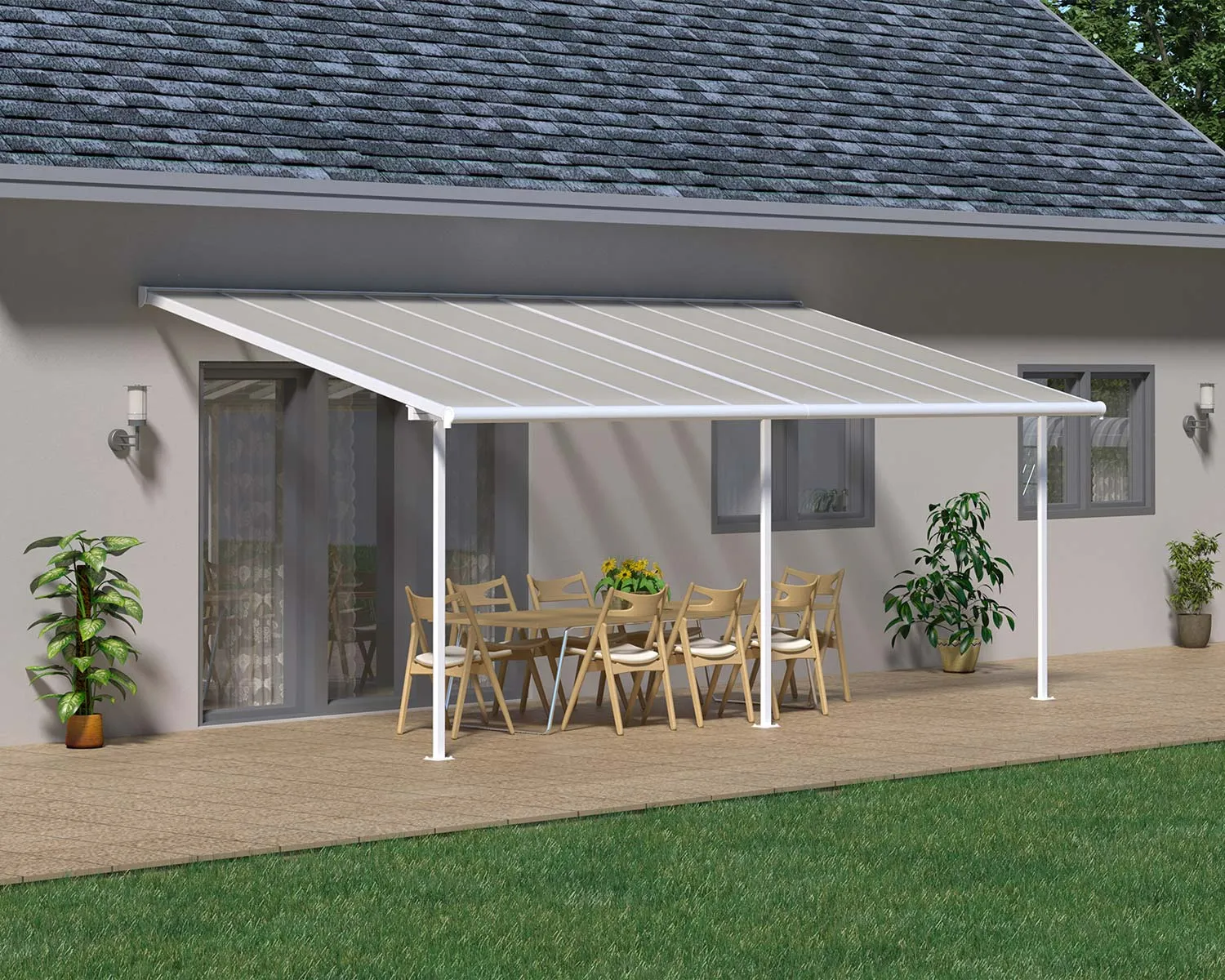
📖 Quick Definition
A patio cover is a solid-roof structure, often attached to the home, designed to provide full, reliable rain protection and consistent shade. Because it creates a continuous shelter, a patio cover feels like outdoor room extensions rather than a separate garden feature.
So, what is a patio cover structurally? It typically features a patio cover roof pitch (a slight slope) to ensure water runs off into a gutter system. Unlike a pergola, it is almost always designed to keep the area underneath 100% dry, making it ideal for outdoor sofas and TVs.
🔄 The “Enclosure Effect”
The key covered patio vs pergola difference is the “Enclosure Effect.” A patio cover traps more heat and blocks light from entering the adjacent windows of your house, but it guarantees that your scheduled BBQ won’t be ruined by a thunderstorm.
🏠 Is a patio cover attached to the house?
Most commonly, yes. A ledger board attaches the cover to the home’s existing wall, sharing the structural load. However, freestanding solid-roof covers also exist.
🏗️ What are patio cover roof options?
When selecting a solid roof, the material dictates comfort. Common patio cover roof options include insulated panels vs polycarbonate or standard metal roofing.
1. Insulated Panels (The Gold Standard)
These are foam-core aluminum panels. They are the best choice because insulated patio cover panels reduce heat and noise (rain doesn’t ping loudly).
2. Polycarbonate (Plastic)
Transparent sheets that let light in. ⚠️ WARNING: A polycarbonate patio cover heat buildup (greenhouse effect) can be intense. In our experience, these can make a patio unusable in summer unless adequate ventilation is added.
3. Metal/Aluminum Pans
Affordable single-layer sheets. ⚠️ Note: Be aware of metal patio roof panels rain noise; they can sound like a drum during a storm.
4. Shingled Roof
A shingle patio cover roof to match house aesthetics is the most expensive option but looks the most integrated.
📊 Comparison Table: Pergola vs. Patio Cover
If you are looking for a quick pergola vs patio cover comparison table, this breaks down the functional differences.
| Feature | Pergola (Louvered) | Patio Cover (Solid) |
|---|---|---|
| Rain Protection | High (when closed) | 100% Waterproof |
| Shade Control | Adjustable (Sun or Shade) | Fixed (Always Shaded) |
| Airflow | Excellent (Heat escapes) | Low (Heat traps) |
| Look & Feel | Architectural, Light, Modern | “Outdoor Room,” Extension |
| Interior Light | Preserves light for indoor rooms | Darkens adjacent indoor rooms |
| Permit Difficulty | Medium (Varies) | High (Strict engineering) |
| Maintenance | Low (if Aluminum) | Medium (Gutter cleaning) |
| Best Climates | Hot, Variable Weather | Rainy, Snowy Regions |
🌧️ Which one is better for rain?
The traditional answer used to be “Patio Cover.” However, modern engineering has changed the answer to: “Is a pergola good in the rain? Yes, if it is louvered pergola.“
Patio Cover vs. Pergola Rain Protection
A solid patio cover is undeniably simpler. It is 100% waterproof and sheds water away from the house naturally. However, can a louvered pergola keep rain out? Absolutely. While fixed slat pergolas offer low rain protection, adjustable louvered systems provide high protection when closed.
🏭 Factory Experience (Progolas)
When we machine our aluminum louver blades, we engineer interlocking channels specifically to prevent drips.
The Mechanism: The key is the pergola drainage system gutters downspouts. In a high-quality louvered pergola, the water channels inside the louver blade, flows into the beam’s internal gutter, and exits through the post. We have tested our systems in simulated torrential downpours.
📝 Rain Zone Checklist
- Where will the drip line land? (Avoid walkways).
- Do you need gutters/downspouts? (Yes, to direct water away from the foundation).
- Splash-back risks: Is the area close to sliding doors?
☀️ Which one is better for hot climates?
If you live in Arizona, Florida, or Southern California, the battle of pergola vs patio cover in hot climate performance has a clear winner: The Pergola.
🌡️ The Physics: Why Solid Roofs Fail Here
A solid patio cover vs pergola debate often ignores pergola airflow vs solid roof heat trap dynamics. A solid roof traps rising hot air against the ceiling.
The Solution (“Chimney Effect”): According to U.S. Department of Energy concepts on “Cool Roofs,” proper ventilation reduces cooling loads. A louvered pergola allows you to crack the blades slightly, sucking hot air up and out while blocking the sun’s radiant heat. This creates excellent airflow where heat escapes rather than builds up.
📝 Key Considerations for Hot Zones
If you must choose a solid cover, get insulated panels. Non-insulated metal transfers heat directly.
Avoid clear plastic in hot zones; it creates a greenhouse effect that makes the space unusable.
Keep louvers angled at 45 degrees. This blocks the direct sun but allows the cooling breeze to pass through.
❄️ Which one is better for snow and high wind?
Both structures can handle extreme weather if engineered correctly. However, the physics of how they handle the load differs significantly.
☃️ Snow Performance
Can a pergola withstand snow? Yes. High-end aluminum pergolas are rated for specific snow loads (e.g., 60 lbs/sq ft).
Critical Difference: You must keep the louvers vertical (open) in heavy snowstorms to prevent damage, whereas a patio cover must hold the entire weight of the snow pack.
💨 Wind Resistance
Pergola anchoring for high wind is critical. A solid patio cover acts like a giant sail and suffers from high uplift forces.
The Advantage: An open pergola allows wind to pass through the slats/louvers, drastically reducing stress on the frame compared to a solid roof.
✅ Ask Your Supplier For:
- Engineered ratings: Request the specific pergola wind rating and snow rating documents (e.g., checking against local building codes).
- Local Compliance: Verify patio cover wind load requirements for your specific county before purchasing.
🔗 Attached vs. Freestanding: How this changes your choice
Deciding between an attached pergola vs freestanding pergola (or cover) affects your installation complexity.
🏠 Attached Structures
Seamless indoor-outdoor transition.
🌳 Freestanding Structures
Poolside zones or garden focal points.
💰 Pergola vs. Patio Cover Cost: What Actually Drives the Price
We won’t give you a fake dollar amount because labor rates vary wildly. Instead, let’s look at the cost factors. Generally, the investment hierarchy looks like this:
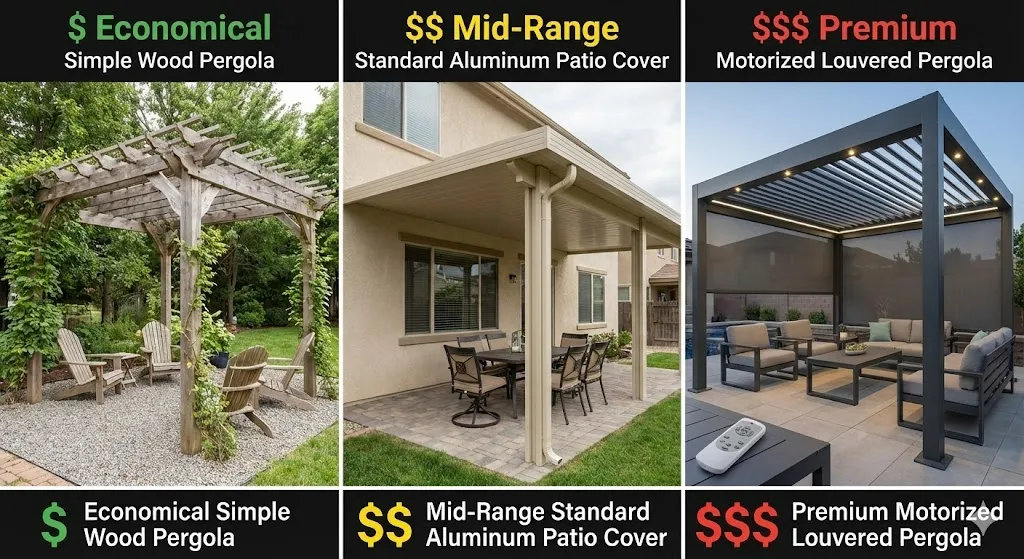
Simple Wood Pergola
Standard Aluminum Patio Cover
Motorized Louvered Pergola
☂️ Patio Cover Drivers
- Soft Costs: Patio cover cost drivers permits engineering electrical.
- Roofing Materials: Insulated panels typically cost 30% more than basic metal pans.
- Complexity: Tie-in complexity (cutting into the existing house roof) drives labor up significantly.
☀️ Pergola Drivers
- Material: What affects pergola installation cost most is the base material (e.g., Cedar vs. Aluminum).
- Technology: Louvered pergola cost drivers include motors and internal guttering systems, which add to manufacturing costs.
📋 How to get a precise quote
Suppliers need these 4 key details to give you an accurate number:
2. Attached or Freestanding
3. Foundation (Concrete/Grass)
4. Wind/Snow Zone
🛠️ Maintenance & Longevity: Which is Lower Maintenance?
Which lasts longer pergola or patio cover? This depends more on material than structure type.
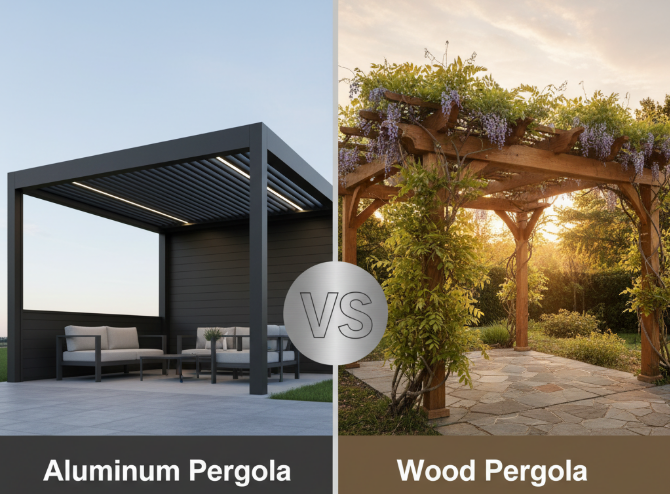
🪵 Material Battle: Wood vs. Aluminum
Wood Pergola
High Maintenance: Requires staining or sealing every 2 years to prevent rot and fading.
Aluminum (Powder-Coated)
Low Maintenance: Rust-free surface that requires only a simple wash down with water.
⚙️ System Maintenance Requirements
- Louvered Pergola (Moving Parts): You need to clear leaves from the louvers twice a year to ensure the motor runs smoothly and drainage isn’t blocked.
- Patio Cover (Solid Roof): Solid roofs collect more debris that must be cleaned from gutters regularly to prevent overflow and water stains.
✅ Annual Pergola Maintenance Checklist
- Check for loose fasteners or bolts.
- Wash powder coat with mild soap and water.
- Lubricate motor pivot points (specifically for motorized louvered systems).
🎨 Design & Curb Appeal: Which Looks More Modern?
📈 The ROI Reality
According to recent real estate industry data, outdoor living upgrades can return 60-80% of their investment at resale. However, aesthetics matter deeply.
✨ Modern Look (Pergola)
A pergola with screens, modern privacy panels, and clean lines (like the Progolas system) is trending in contemporary architecture. It adds vertical interest without feeling heavy.
🏠 Traditional Look (Patio Cover)
A patio cover outdoor room aesthetic matches traditional homes but can sometimes make a small backyard feel smaller due to the “visual pressure” of a solid roof.
📏 Design Rule: Small Yards
Pergola vs. patio cover for small yard: Choose a Pergola. The sky visibility prevents the space from feeling enclosed and makes the yard feel bigger.
📑 Permits & HOA: Which is Easier to Approve?

🏛️ The Permit Reality
Almost always, yes. Because they add “impervious surface” (solid roof area) to your lot, they trigger strict zoning and drainage reviews.
Often, yes. Is a pergola considered a structure for permits? Yes, usually. However, pergola permit requirements (height, setbacks, electrical) are often slightly more lenient for “open lattice” structures than for solid roofs.
🏡 HOA Rules: Pergola vs. Patio Cover
HOAs generally prefer pergolas because they are less intrusive to neighbors’ views.
Solid patio covers often face stricter scrutiny regarding roof color matching (to the main house) and height restrictions, as they can block sightlines more significantly than an open frame.
⏱️ What Should You Buy? A 60-Second Decision Checklist
Still undecided on pergola or patio cover which should I choose? Use this checklist to finalize your decision.
☂️ Choose a Patio Cover If…
- [ ]
You need the space to stay 100% dry for electronics/sofas. - [ ]
You want a permanent “outdoor room” extension. - [ ]
You live in a region with constant rain (e.g., Seattle). - [ ]
Best choice for outdoor dining rain vs sun is your priority, and you don’t mind a darker interior living room
☀️ Choose a Pergola (Louvered) If…
- [ ]
You want control: Sun when you want it, shade when you don’t. - [ ]
You prioritize airflow to keep the patio cool. - [ ]
You want to preserve natural light in your home’s windows. - [ ]
You prefer a modern, architectural look. - [ ]
Do I need full rain protection or airflow? You want both (Louvered offers the hybrid solution).
🚫 Buyer Mistakes to Avoid (Common Pitfalls)
We have seen hundreds of projects, and most problems come from poor planning, not the product itself. Avoid these expensive errors:
🏁 The Final Verdict
The battle of Pergola vs Patio Cover has changed. With the advent of aluminum louvered pergolas, you no longer have to sacrifice rain protection for airflow.
🤝 The Modern Solution
You can now have the clean, modern lines of a pergola combined with the functional roof of a patio cover. This hybrid approach solves the “dark room” issue of solid covers while fixing the “rain issue” of traditional pergolas.
Ready to explore a system that offers the best of both worlds?