

You start searching for “shade ideas” and suddenly you are bombarded with terms like bioclimatic pergolas, retractable awnings, pop-up canopies, and shade sails.
What is the actual difference? Is a “pavilion” just a fancy gazebo? Can a retractable awning wind rating handle a summer storm?
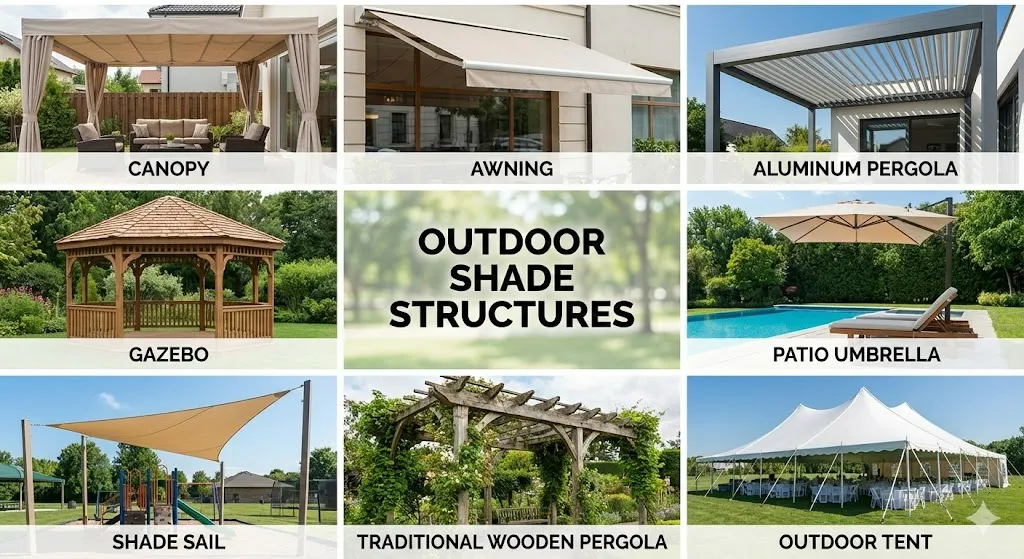
🏭 From the Factory Floor
As a manufacturer with over 17 years of experience in aluminum profile engineering, I have seen all types of structural failures and successes, depending on their installation location and method.
I’ve seen patio covers for outdoor dining areas transform a restaurant’s revenue, and I’ve seen cheap pop up canopy for events collapse at the first gust of wind because the user didn’t understand the difference between “temporary” and “permanent.”
📘 In This Guide
We are not just listing definitions. We are going to dissect the 7 most common shading methods based on structure, durability, and use case.
- ✔We will walk through the installation realities.
- ✔We will expose the hidden costs.
- ✔We will define the engineering limits of each.
Whether you need a simple entrance canopy for front door or a heavy-duty snow load patio cover, by the end of this 6,000-word guide, you will know exactly what to buy.
⏱️ First, Let’s Spend 30 Seconds to Figure Out How to Choose
Before we dive into the deep technical details, let’s simplify the decision-making process. Most buyers get overwhelmed because they look at aesthetics first. You should look at physics first.
1. Group by “Fixed to Building vs. Freestanding”
If you have a solid wall and want to extend your indoor living space directly outward without walking in the rain, look at Awnings (Retractable/Fixed) or Attached Pergolas.
Best for: Patio door shade, extending living rooms, keeping windows cool.
If you want to create a destination spot in the middle of your garden or pool deck, look at Gazebos, Freestanding Pergolas, or Pavilions.
Best for: Backyard gazebo ideas, poolside lounging, garden focal points.
If you rent your home, or need shade only for a weekend camping trip, look at Patio Umbrellas, Tarps, or Pop-Up Tents.
Best for: Camping shade setup, beach trips, renters.
2. Group by “Use Scenario”
- 🚪 Windows & Doors:
You need something with a steep pitch to shed water quickly. Best awning for windows or a polycarbonate entrance canopy. - 🍽️ Dining & Lounging (Patio):
You need height and airflow. A pergola for patio seating area allows heat to escape. - 🎒 Camping/Wild:
Weight is your enemy. You need a tarp shelter setup for camping. - 🏢 Commercial Entry:
You need branding space and durability. A fixed storefront awning idea is standard here.
3. Group by Wind & Rain Resistance
Umbrellas, Pop-up tents. (Must close in wind > 15 mph).
Retractable awnings (can handle rain if pitched, but weak against wind).
Aluminum patio covers, snow load pergolas. These are permanent structures designed to withstand nature’s fury.
📊 Outdoor Shade Comparison Table
To make this digestable, I’ve compiled a matrix comparing the key performance metrics of these structures.
| Structure Type | Shade Capability | Rain Protection | Wind Resistance | Footprint | Install Difficulty | Budget |
|---|---|---|---|---|---|---|
| Awning | Adjustable | Moderate (Light Rain) | Low (Class 1-2) | Wall-Mounted (No legs) | Medium (Heavy lift) | $$ |
| Pergola | Adjustable (Louvers) | High (If Louvered) | High (100+ mph) | Fixed Legs | High (Construction) | $$$$ |
| Gazebo | High (Fixed Roof) | High (100% Dry) | Medium/High | Fixed Legs | Medium/High | $$$ |
| Umbrella | Low/Medium | Low | Very Low | Small Base | Very Low | $ |
| Canopy/Tent | Medium | Moderate | Low | Temporary Legs | Low | $ |
| Tarp | High (Custom) | High | Low/Med (Skill) | Guy Lines (Trip) | Medium (Skill) | $ |
| Pavilion | High | High | High | Fixed Legs | High | $$$$ |
☀️ Shade Effect (Coverage Area / Light Blocking / Cooling Feel)
A patio cover for outdoor dining area needs to cover the table and the chairs when pulled out. Remember, shade moves. A fixed roof (Gazebo) offers constant shade. An adjustable roof (Louvered Pergola) allows you to reclaim the winter sun.
🌧️ Rain Ability (Drainage / Waterproofing)
Pergolas that block rain have internal gutters. Awnings rely on a steep pitch (14 degrees minimum). Flat tarps will pool water and collapse.
🌪️ Wind & Stability (Wind Class / Anchoring)
Retractable awning wind ratings are often misunderstood. Class 2 means it can take a breeze (approx 20mph), not a storm. A wind resistant patio umbrella might have vents, but it still acts like a sail. Only permanent structures like our snow load patio cover are engineered for hurricane-force winds.
🤔 6 Questions You Must Ask Before Selection
1. Where are you shading?(Window / Door / Balcony / Terrace / Garden / Parking / Camping)
I once had a client want a massive gazebo for backyard seating installed on a 4-foot wide balcony. It was physically impossible. You must measure your ground footprint vs aerial footprint.
Example: An awning has zero ground footprint but a large aerial one.
2. Do you need “Sun Shade” or “Rain Shelter”? (Or Both)
- ☀️ Just Sun: If you just want to stop glare, a mesh shade sail is cheap and effective.
- ☔ Rain Protection: If you want to keep your sofa cushions dry during a thunderstorm, mesh is useless. You need a solid roof or a waterproof fabric.
3. What is the weather intensity in your area?(Wind Load / Snow / Heavy Rain)
According to the ASCE 7-10 Minimum Design Loads for Buildings and Other Structures, wind loads vary drastically by region. A structure in Miami must withstand 150+ mph winds, while one in Phoenix focuses on UV degradation.
⚠️ Ignoring local wind load charts is the #1 reason for structural failure.
4. Can you drill foundation/holes?(Wall Bearing / Ground Foundation / HOA)
Do I need a permit for a pergola? Often yes.
If you are a renter, you cannot drill into the cladding for an awning. You are stuck with freestanding options like umbrellas or pop-up tents.
5. Can you accept columns?(Footprint / Traffic Flow / Furniture Layout)
Columns block views. If you have a beautiful sliding glass door, a shade without posts on patio (like an awning or cantilever) keeps the view open. If you don’t mind columns, a pergola defines the space better.
6. Do you want it retractable?(Seasonality / Winter Light / Storage)
In the Northeast US, you want winter sun to warm your home. A fixed roof blocks that free heat. A retractable awning or louvered pergola gives you control.
🚪 Entrance Canopy (Door/Window Rain Shelter)
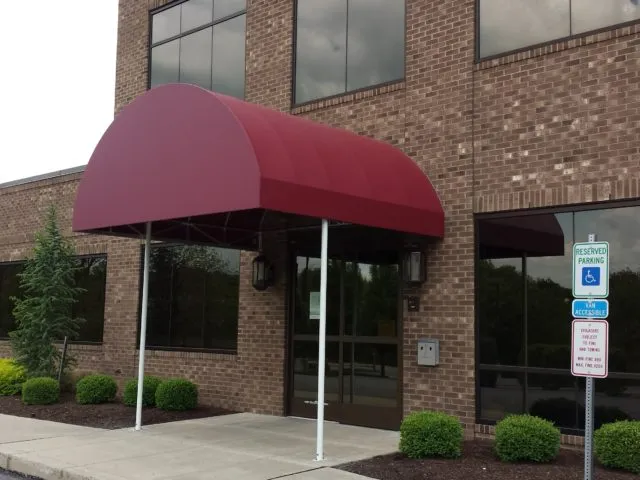
1. What Is It & Typical Structure
An entrance canopy is a small, fixed structure mounted directly above a door or window. It typically consists of bracket arms (plastic, steel, or aluminum) holding a sheet of polycarbonate or aluminum composite.
2. Suitable Scenarios
- 🏠 Front Door Canopy:
Keeps your guests dry while they wait for you to answer the bell.
- 🪟 Window Sun Awning:
Stops rain from hitting the glass, reducing cleaning frequency.
3. Pros & Cons
Very cheap, easy DIY, protects the door frame from rot.
Small coverage area (usually only 3-4 feet deep), not for sitting under.
4. Key Parameters
- 📏 Projection:
60cm – 120cm is standard. - 🛡️ Material:
Solid Polycarbonate (looks like glass, strong) vs. Hollow Polycarbonate (cheaper, yellows over time).
- 🏗️ Bracket Material:
Engineering plastic is fine for snow-free areas; aluminum is needed for snow zones.
⛱️ Awning (Retractable / Fixed)
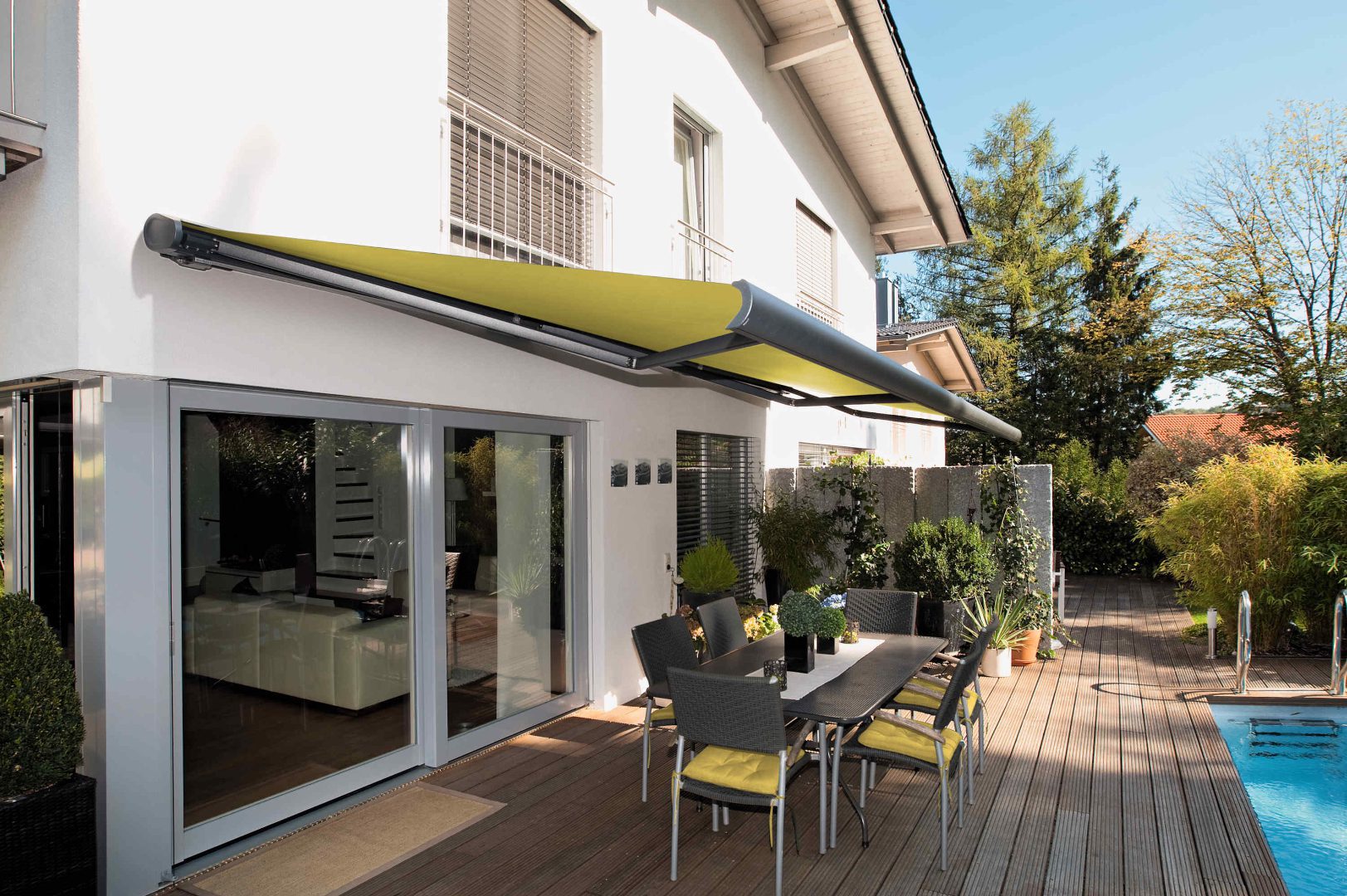
1. What Is It & Common Types
An awning is a fabric sheet extended by metal arms.
- 🔄 Retractable:
Motorized or crank-operated. - 🏢 Fixed:
Welded frame with fabric stretched over it (common on shops).
2. Suitable Scenarios
- 🏡 Best Awning for Patio Door:
Provides massive shade (up to 13ft projection) without legs.
- 🛍️ Storefront Awning Ideas:
Great for branding.
3. Pros & Cons
Disappears when not needed. No columns to bump into.
The retractable awning cost installed can be high ($2k-$5k). It is the weakest against wind.
4. Key Parameters
- 🧵 Fabric:
Solution-Dyed Acrylic (fade resistant) is the gold standard. Polyester fades in 2 years.
- 📐 Pitch:
Must be adjustable to ensure water runoff.
- 🌬️ Sensors:
Awning wind sensor is a must-have for motorized units.
⛩️ Pergola (Patio Shelter / Bioclimatic)
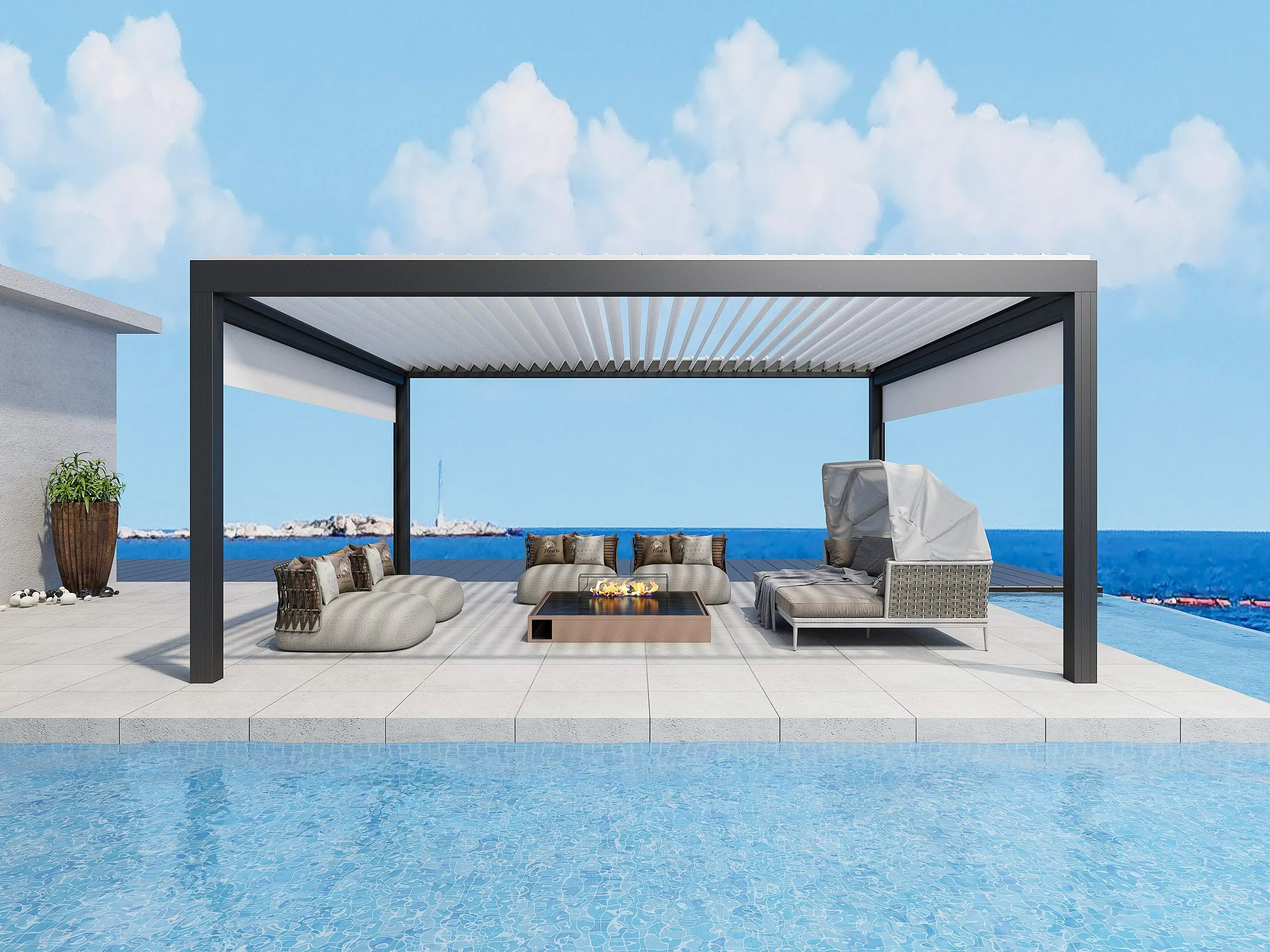
1. What Is It & Common Forms
A pergola is a structural framework with columns supporting a roof grid. Modern versions use aluminum louvers that rotate (bioclimatic) to control sunlight and rain.
2. Suitable Scenarios
- 🛋️ Pergola for Patio Seating Area:
Defines an “outdoor living room.”
- 🍽️ Patio Cover for Outdoor Dining Area:
Install heaters and lights on the beams for year-round use.
3. Pros & Cons
Snow load patio cover capability (very strong). Increases home value. High-end look.
Expensive. Requires a foundation (concrete footing). Pergola permit requirements can be strict.
4. Key Parameters
- 🔄 Louvers:
Double-layer aluminum is better for insulation than single layer. - 📏 Span:
4m – 6m between posts is standard for commercial grade. - 💧 Drainage:
Look for pergola gutter add-ons or integrated internal drainage.
🏭 Factory Insight: The “Leak” Problem
⚠️ Real World Experience
We once had a distributor in the UK complain that their pergolas were leaking. We flew an engineer out and found the issue wasn’t the manufacturing, but the installation.
The installer hadn’t sealed the internal gutter joints with silicone during assembly, assuming the aluminum fit was tight enough. It wasn’t. Water is persistent.
We updated our manual to include a mandatory “Step 7: Silicone Seal Check” and now provide high-grade sealant in the box.Lesson: Even the best engineering fails if the waterproofing steps are skipped.
🛖 Gazebo (Independent Leisure Space)
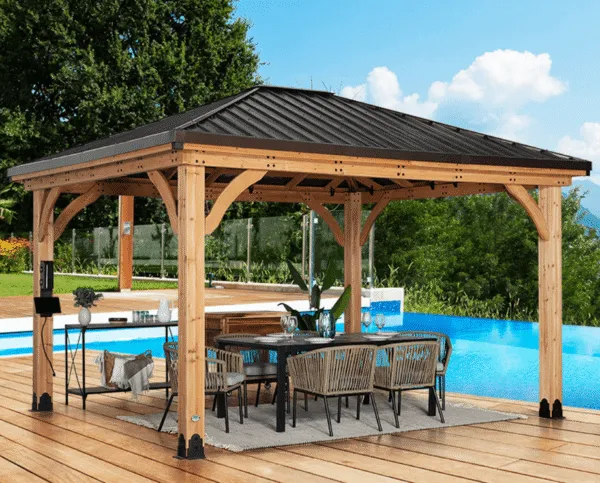
1. What Is It & Typical Structure
A gazebo typically has a fixed, solid roof (often hexagonal or octagonal, though square is common now) and a raised floor or defined perimeter. It usually has built-in railings or half-walls.
2. Suitable Scenarios
- 🍵 Backyard Gazebo Ideas:
A tea house in the garden.
- 🪰 Gazebo for Backyard Seating:
A bug-free zone (if screened).
3. Pros & Cons
100% waterproof roof. Often comes with mosquito netting tracks. Classic aesthetic.
The roof is fixed (can be dark inside). Heavy visual mass (looks bulky in small yards).
4. Key Parameters
- 🏗️ Roof Material:
Galvanized steel or aluminum composite panels are better than fabric (which rots).
- 🔩 Anchoring:
Must be bolted to concrete.
🏖️ Patio Umbrella (Flexible & Small)
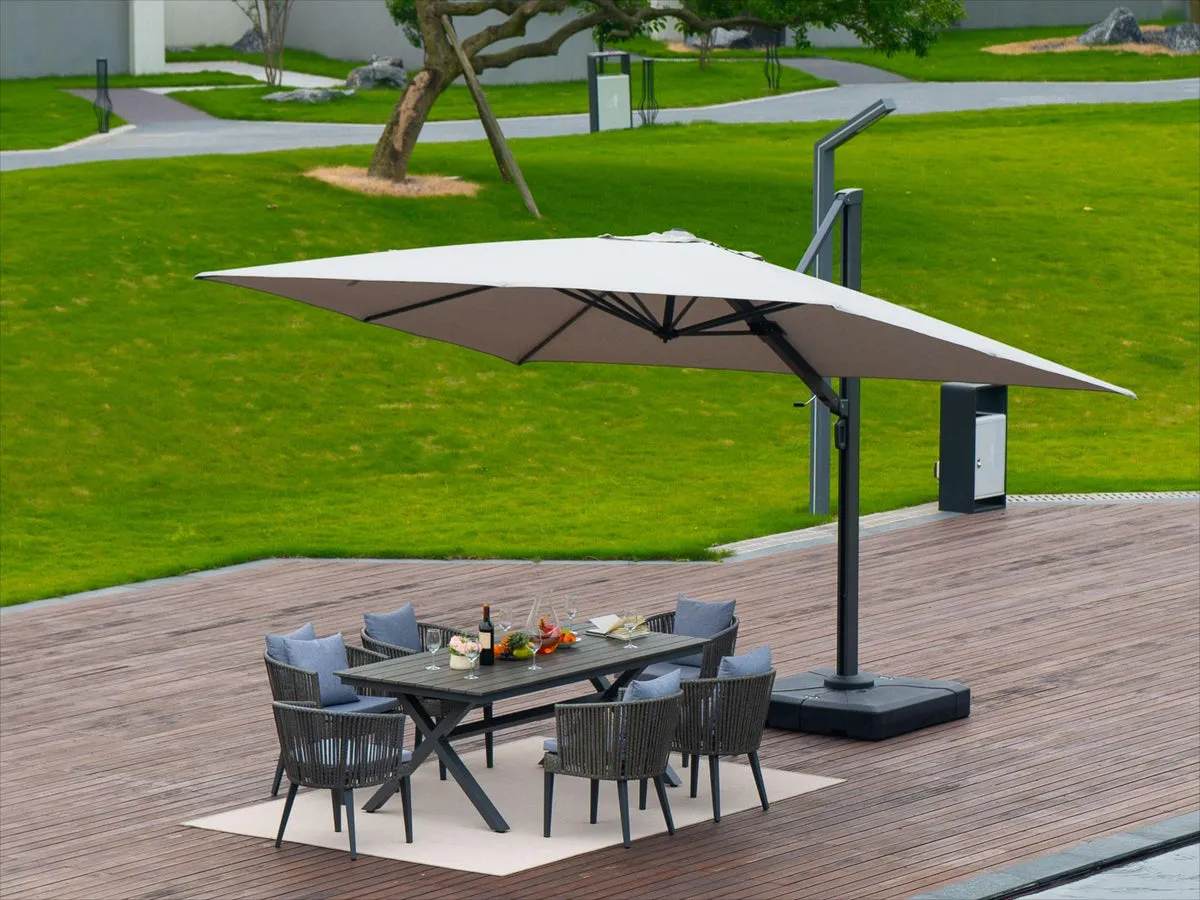
1. What Is It & Common Types
- 📍 Center Pole:
Goes through the table hole.
- 🎣 Cantilever (Offset):
Pole is on the side, umbrella hangs over the space.
2. Suitable Scenarios
- 📐 Best Patio Shade for Small Space:
Balconies, poolside loungers.
- 🔑 Renters:
No installation required.
3. Pros & Cons
Cheap, portable, colorful.
Wind resistant patio umbrella? Rarely. Even the best ones spin or tip in 20mph winds. Small coverage area.
4. Key Parameters
- ⚖️ Base Weight:
For a 10ft cantilever, you need at least 200lbs of sand/water in the base.
- 🧵 Fabric:
Look for Sunbrella or Olefin (high UV resistance).
⛵ Tarp / Shade Sail (Camping & Tension Shade)
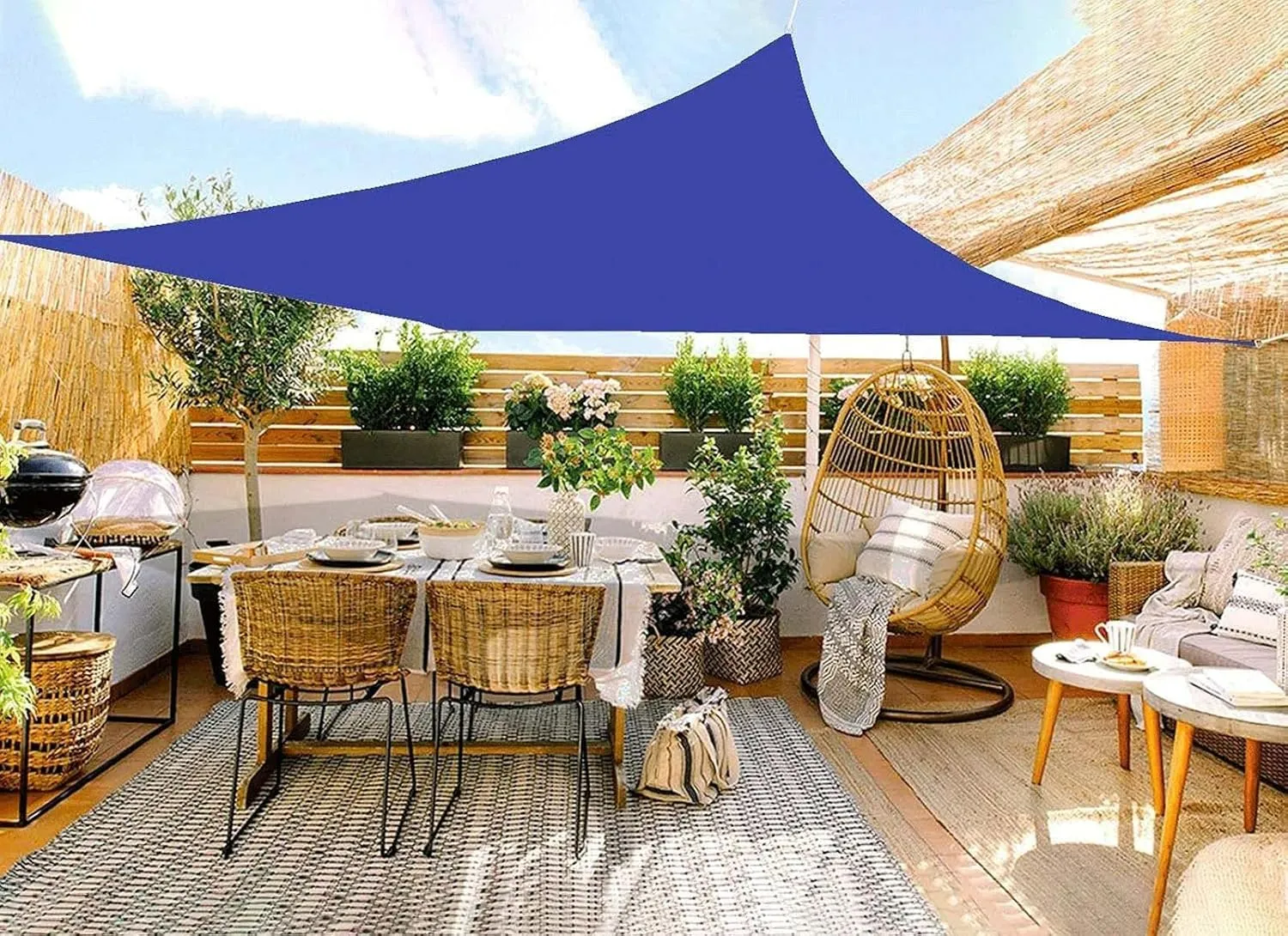
1. What Is It & Setup
A piece of fabric tensioned between points (trees, poles, walls).
- 🪁 Shade Sail:
Curvaceous, permanent tension. - 🏕️ Tarp:
Square, temporary, used with guy lines.
2. Suitable Scenarios
- 🏙️ Shade Sail:
Sails are great for artistic, large commercial spans (playgrounds).
- 🎒 Camping Tarp Shelter:
Essential for bushcraft and lightweight travel.
3. Pros & Cons
Shade sail cost and lifespan is good value for huge areas. Looks architectural and modern.
Shade sail wind load is huge on the anchor points. You need massive steel posts or structural wall mounts. Water pools easily if not tensioned perfectly (hypar shape).
4. Key Parameters
- ⚓ Corner Rings:
Must be marine-grade stainless steel with reinforced webbing.
- 🛡️ Fabric:
HDPE Mesh (lets water through, handles wind) vs. Waterproof PVC (catches water, heavy load).
🌿 Trellis (The Green Option)
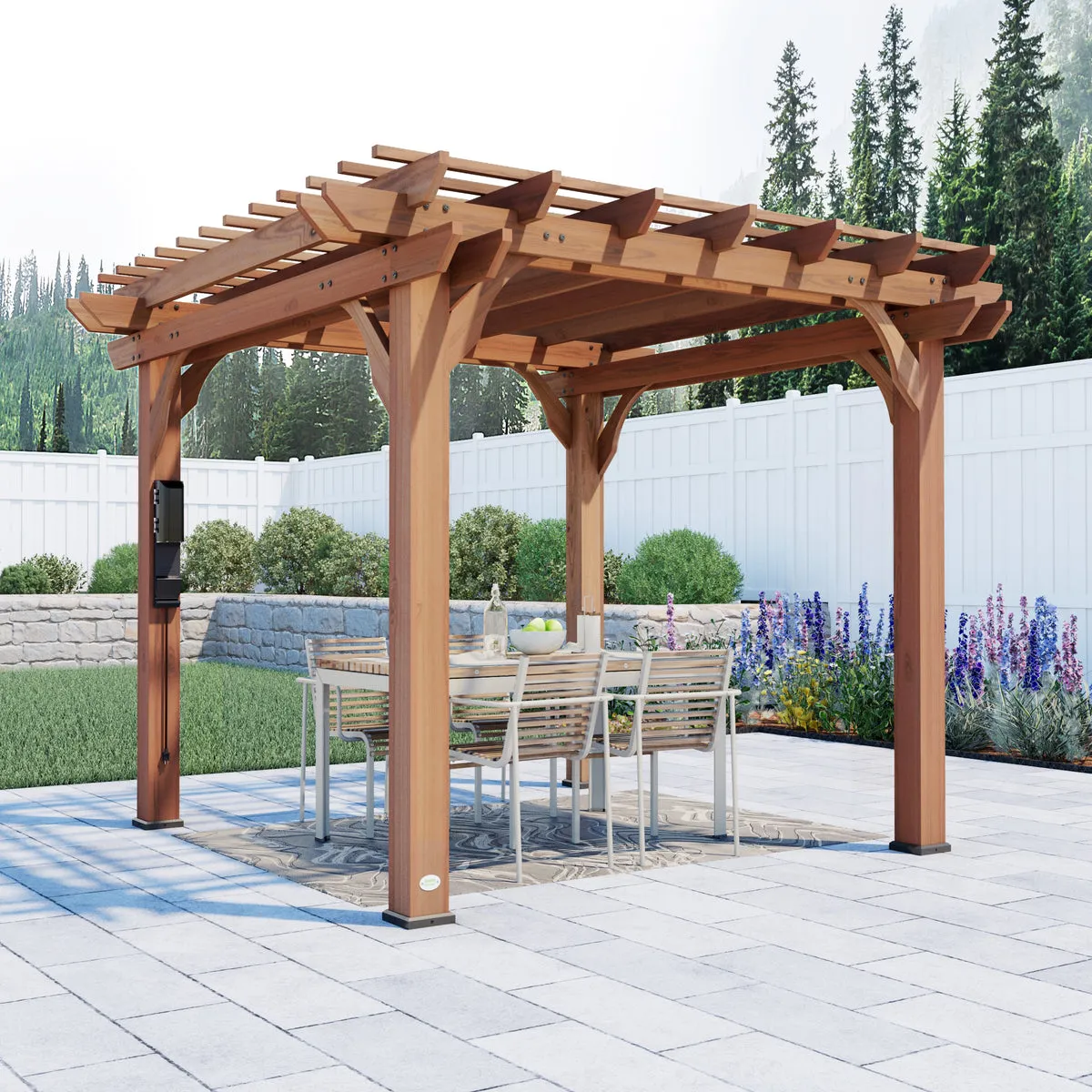
1. What Is It & Form
Traditionally, a Trellis was just open beams for vines to climb on. This is the “green roof” approach.
2. Suitable Scenarios
- 🍇 Garden Walkway:
Growing grapes or wisteria.
- 🛤️ Aesthetic Framing:
Defining a path without blocking rain.
3. Pros & Cons
Beautiful, natural cooling (transpiration from plants).
Takes 3-5 years to grow the “roof.” Bugs and dropping leaves/fruit on your furniture.
⛺ Outdoor Tent
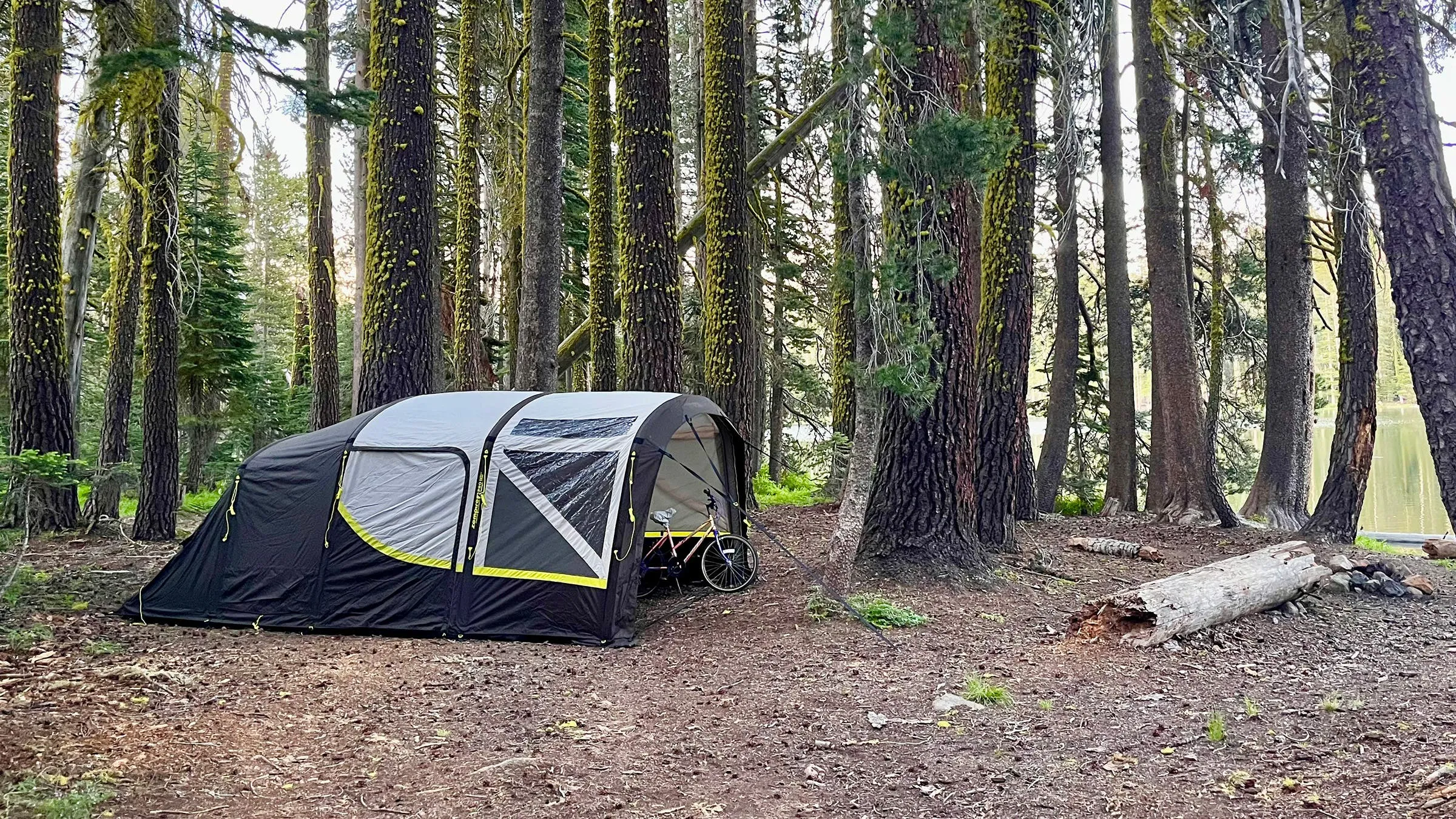
1. What Is It
An accordion-frame structure with a fabric top. Sets up in 60 seconds.
2. Suitable Scenarios
- 🎟️ Pop Up Canopy for Events:
Farmers markets, tailgating.
- 🔥 Camping:
Quick kitchen shelter.
3. Pros & Cons
Portable, cheap.
They fly away constantly. Common mistakes installing awnings applies here too—people don’t stake them down. Short lifespan (frames bend easily).